
One circuit board, three industrial protocols — but not three networks at once
On 5 November 2026, Texas Instruments introduced the TICS100MOD, a compact industrial-communications system-on-module designed to support EtherCAT, EtherNet/IP and PROFINET. Its striking design proposition is not that three incompatible plant protocols magically become one. It is that an equipment maker can standardise the communications hardware and select the required protocol stack at boot through the appropriate firmware.
That distinction matters to system integrators. A machine sold to three factories may need three industrial network interfaces, different validation work and separate spares. A common physical module could reduce board variants and inventory. But protocol certification, configuration, conformance testing and PLC compatibility remain real engineering responsibilities. TI describes its module as pre-certified; a finished machine still needs end-to-end acceptance and the applicable device integration files.
How the module works
TI says the TICS100MOD is built around an AM2612 MCU and DP83826AI Ethernet PHY, with two Arm Cortex-R5F cores and external memory. The protocol software is selected when the system starts. This is not transparent translation between live EtherCAT, PROFINET and EtherNet/IP segments, and it is not proof that an arbitrary application can change protocols while controlling a running machine. Switching an installed system requires a planned firmware/configuration change, a compatible PLC-side description and fresh commissioning evidence.
For an OEM, the attraction is product-line simplification. For an end user, the practical test is whether cyclic process data, acyclic diagnostics, safe-state handling and fault recovery all match the selected controller. A laboratory demo with a PLC is a starting point rather than an acceptance certificate for a production line.
The second device tackles the sensor layer
Alongside it, TI announced the TIOM2212, a dual-channel IO-Link master. IO-Link connects compatible sensors and actuators to a master; industrial Ethernet carries the resulting device data further upstream through the controller architecture. They are different layers with different timing and configuration requirements. The announcement presents the master as compatible with specified Sitara networking SoCs and AM13Ex real-time MCUs through its integrated frame handler. It does not demonstrate that an existing conventional digital input can be turned into an IO-Link channel by changing a PLC setting.
TI states that preproduction quantities of TIOM2212 were available at announcement, while the TICS100MOD was scheduled for availability by the end of 2026. Those are vendor statements and should be verified against current ordering and software-revision records before any project commitment.
What an integration acceptance test should actually prove
- Controller identity: record the selected firmware, network protocol, device description and PLC configuration; verify that the controller sees the intended device with the expected I/O byte layout.
- Timing: capture update interval, worst-case communication jitter and recovery after a cable disconnect; do not infer deterministic performance merely from a protocol name.
- Device diagnostics: prove the distinction between absent device, stale sensor sample, quality fault, and valid process value. Log test events with synchronised timestamps.
- Startup and fallback: test power cycles, field-device replacement and loss of communications. Confirm the machine’s independent protective functions and controlled fallback behaviour.
- Traceability: store firmware, parameter set, wiring revisions, observation logs and PLC changes alongside the factory acceptance test.
Where this fits into CANS system integration
CANS can help with the less glamorous but essential connection between field devices and plant decisions: PLC/SCADA and industrial-network integration, field signal mapping, deterministic event capture, alarm engineering and commissioning. A correctly configured device and a reliable controller are the foundation; the higher-level CansNEXUS digitalisation and OEE/MES analytics layer can then consume labelled, timestamped machine-state and diagnostic data. That supervisory layer does not replace safety-certified interlocks or drive protection.
A useful retrofit begins with a network and I/O audit, not a decision to rip out functioning equipment. Identify controller vendors, installed network types, IO-Link-capable devices, spare channel needs, expected sample ages, and interface maintenance responsibility. Define a brownfield migration plan that keeps critical machine control isolated while exposing authorised health and production information for maintenance and management.
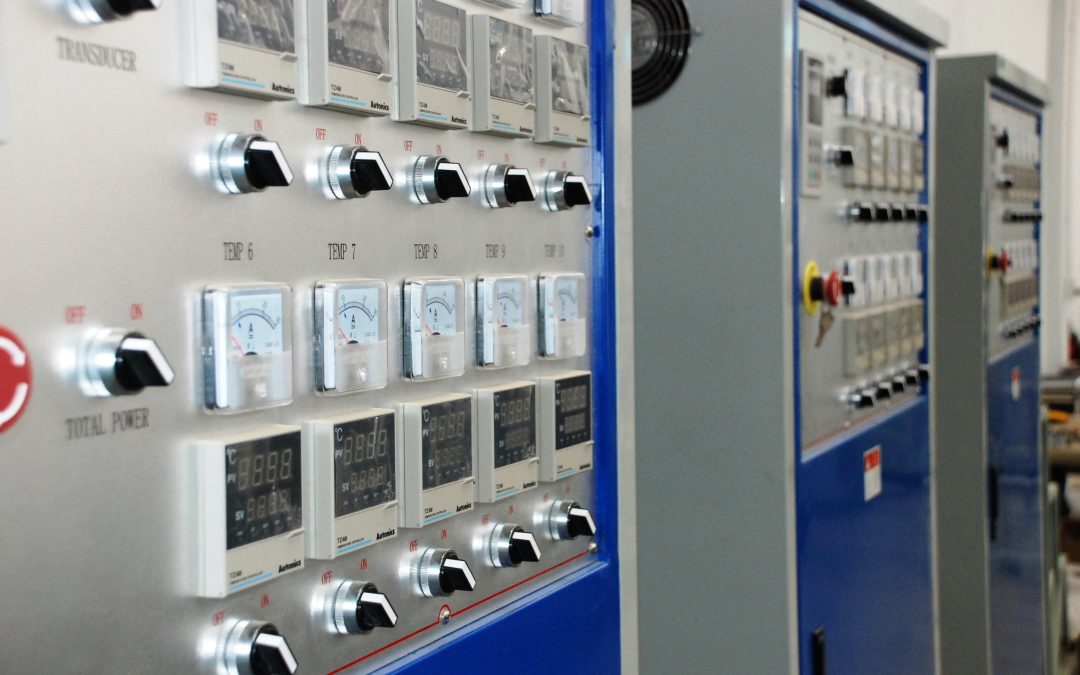
Source: Texas Instruments, 5 November 2026, official product announcement. Specifications, certification and availability above are TI claims unless independently documented; no CANS implementation or independent test is implied. The accompanying featured image is illustrative only: industrial control cabinets photographed by Poly-protech, Wikimedia Commons, CC BY-SA 4.0; it does not show TI’s 2026 products. No authenticated video of the equipment was available for this report.
For project scoping, contact CANS or WhatsApp the engineering team.
Recent Comments