
AI HVAC OPTIMISATION · SEMICONDUCTOR & MISSION-CRITICAL FACILITIES
Optimise Energy Without Compromising Process Stability
CANS combines proven semiconductor facility automation and chiller-control experience with modern AI, machine learning, digital-twin and optimisation technologies.
Our approach is designed for facilities where environmental stability, equipment protection and production continuity come first. AI operates as an intelligent supervisory layer over the existing PLC/BMS architecture — within approved operating limits, with traceable recommendations and safe fallback behaviour.
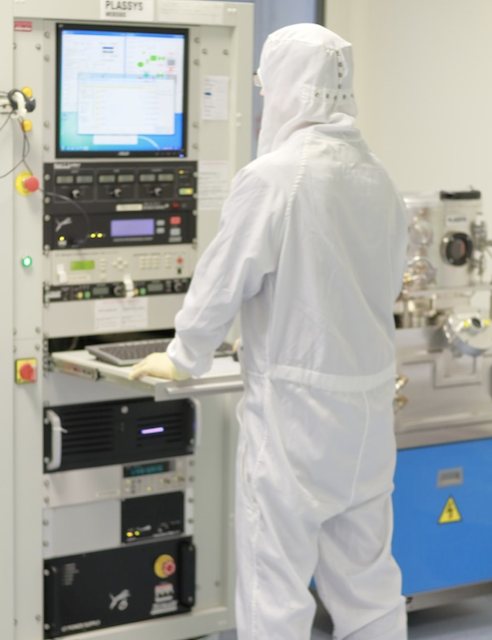
Actual CANS semiconductor project image
WHY CANS
Three Capabilities That Must Converge for AI HVAC to Work
01 · FACILITY ENGINEERING
Semiconductor HVAC & BMS Context
CANS has delivered plant-wide BMS/SCADA integration in a semiconductor manufacturing environment, including chillers, AHUs, air dryers, compressors, electrical systems and distributed instrumentation.
That experience matters because mission-critical HVAC optimisation must respect temperature, humidity, pressure relationships, equipment limits and production priorities — not merely reduce kWh.
02 · CONTROL ENGINEERING
Real Chiller Optimisation Experience
CANS has implemented chiller-plant optimisation using instrumentation, PLC control, HMI, reporting and custom control algorithms for an ageing HVAC plant.
We therefore approach AI as an extension of proven control engineering: measured data, constraints, sequencing, feedback, safe setpoints and verifiable plant response.
03 · AI & DIGITAL INTELLIGENCE
Forecast, Optimise, Explain & Control
Our current technology stack supports machine-learning forecasting, Bayesian optimisation, digital-twin context, explainable AI and closed-loop supervisory control.
The objective is not to replace the existing BMS or PLC. It is to make the existing plant more predictive, adaptive and energy-aware.
PROVEN TRACK RECORD · SEMICONDUCTOR FACILITY
Plant-Wide BMS / SCADA Integration
CANS served as the main automation contractor for a semiconductor plant, covering design, detailed engineering, supply, programming, installation, cabling, testing, commissioning and project management.
Approx. 2,500 I/O points distributed across the plant.
More than 800 instruments measuring flow, pressure, differential pressure, temperature, vibration, level, dew point, pH, water hardness and chlorine.
23 local PLC control panels, dual-redundant SCADA servers, operator workstations and HMI systems.
High-level interfaces included chillers, AHUs, air dryers, compressors, transformers, VSDs, power meters and existing PLC systems. The work was planned and executed in a running plant.
PROVEN TRACK RECORD · HVAC ENERGY OPTIMISATION
Chiller Plant Control & Optimisation
For a large shopping mall with an ageing HVAC system and rising electricity costs, CANS worked with an energy consultant to implement improved chiller control using custom control algorithms.
The solution combined instrumentation, PLC control, HMI and reporting to improve the way the plant responded to operating demand.
This project provides the control-engineering foundation for today’s AI-enabled approach: reliable field data, defined operating constraints, plant sequencing, continuous feedback and performance measurement.

CURRENT AI / ML CAPABILITY
A Closed-Loop Optimisation Stack Designed Around the Existing Plant
BMS / PLC + Sensors → Data Context → Forecast → Optimise → Validate Constraints → Apply Setpoints → Measure Response → Explain → Learn
Forecasting: TFT & N-BEATS
Temporal Fusion Transformer and N-BEATS models can be used in parallel to forecast cooling demand, load behaviour and relevant operating variables using historical and contextual data.
Bayesian Optimisation
The AI optimisation layer searches for better operating combinations while respecting approved limits and operational constraints. Typical targets may include chiller staging, chilled-water temperature, pump or tower operation and other supervisory setpoints where appropriate.
Digital-Twin Context
Equipment relationships, capacities, operating envelopes and measured states provide engineering context so optimisation is based on the actual plant rather than an abstract data model.
Site-Calibrated SHAP Explainability
SHAP-based explanations can show which variables most influenced a forecast or optimisation decision, helping operators and engineers understand why the system recommends a change.
SEMICONDUCTOR FACILITIES ARE NOT ORDINARY BUILDINGS
Stability First. Optimisation Second.
An optimisation system is only useful when it respects process and facility constraints. CANS therefore uses a staged deployment approach that keeps engineering control and operator visibility at the centre.
1 · Observe
Establish data quality, baselines, operating modes and energy/performance relationships without changing control.
2 · Recommend
Generate AI recommendations, explain them to operators and compare predicted benefits against actual plant behaviour.
3 · Supervised Control
Allow selected recommendations to be applied with operator approval and strict setpoint envelopes.
4 · Autonomous Closed Loop
Move appropriate variables into automatic optimisation only after validation, with constraints, interlocks, fallback logic and continuous monitoring retained.
WHAT THE SYSTEM CAN OPTIMISE
Plant-Level Optimisation, Not a Single-Equipment Gadget
Central Chilled-Water Plant
Chiller loading and staging, chilled-water setpoints, pump sequencing, cooling-tower and condenser-water operation, heat-exchanger behaviour and plant efficiency indicators where site architecture permits.
Air-Side Systems
AHU operation, temperature and humidity control, pressure relationships, airflow and other supervisory variables where they can be adjusted without compromising cleanroom or process requirements.
Energy & Performance KPIs
Plant power, kW/RT or equivalent efficiency indicators, load distribution, delta-T, operating hours, equipment utilisation and deviations from expected performance.
Start With the Existing Plant — Not With an AI Assumption
CANS begins with the plant configuration, existing control strategy, available instrumentation, historical data, constraints and operating objectives. The AI architecture is then calibrated around the actual facility.