
A crane fell onto an elevated railway in São Paulo on 24 October 2026. Moments later, an automated monorail train struck it. The impact sent metal wreckage towards the busy road below. The collision was captured on video. Remarkably, no passengers were reported injured; the crane operator sustained injuries.
The incident occurred on São Paulo’s Line 15-Silver, near Camilo Haddad station on Avenida Professor Luiz Ignácio Anhaia Mello. Brazilian reporting, quoting the Metrô operator and emergency services, describes a crane tipping from a neighbouring site and coming to rest against the monorail guideway before a passing train hit it. The front of the train was damaged and part of the line was temporarily suspended.
There is an important difference between seeing a spectacular collision and knowing why it happened. The reason the crane toppled, and whether any railway warning or protection function was deficient, had not been established in the verified reporting reviewed for this article.
Watch the collision — actual 24 October 2026 footage
CNN Brasil: video of the São Paulo monorail striking the fallen crane (24 October 2026). The broadcaster’s report includes the actual collision and identifies the location. Al Jazeera also published video coverage on 24 October. These are links to the publishers’ own players, not copies of their footage. The exact original camera operator/uploader has not been independently established.
The pictures document the obstruction, impact and falling wreckage. They do not establish why the crane fell, how much warning time was available to the train, or whether any particular controller, sensor or operator failed.
What the investigation can tell us — and what it cannot yet
Agência Estado’s 24 October account, citing the Metrô, says the train was withdrawn for maintenance and passengers were evacuated safely. The crane operator was assisted by emergency responders. The company responsible for the crane, Cortesia Guindastes, said on 25 October that its operator had sustained minor injuries, received hospital treatment and been discharged. It said it was cooperating with the investigation; it did not identify the cause of the overturning.
The distinction matters. A crane can become unstable for various reasons involving its setup, load, radius, operating conditions, support or ground. None should be assigned to this particular event without investigation evidence. Likewise, an automated train colliding with a newly fallen obstruction is not by itself proof of a software defect: detection capability, line-of-sight and stopping distance must be established before drawing conclusions.
The most useful engineering question is one step earlier: why was a piece of heavy lifting equipment able to create a hazard envelope that overlapped an operating transport route? That question is just as relevant to a factory with overhead cranes and AGVs, or a port with mobile cranes and container-handling vehicles.
How CANS could help reduce a similar risk
For a manufacturing plant, port yard or industrial logistics facility, an appropriately scoped CansNEXUS deployment combined with PLC/SCADA integration could make otherwise separate operating areas visible together. The aim would not be an attractive 3D picture of a crane. It would be a controlled, verifiable interface between the lifting operation and everything it could reach if something went wrong.
- Define the actual danger envelope. Model the crane’s possible boom reach, slew, working radius, nearby traffic routes and credible fall zone, not merely the planned load path. A digital twin can display a reviewed exclusion boundary, equipment positions and work-zone status. The boundary and engineering assumptions must be validated on site; a 3D drawing alone cannot prevent a collapse.
- Collect relevant machine condition data. Where crane equipment and approved interfaces support it, capture load-moment warnings, boom angle/extension, slewing position, equipment faults, inspection status and relevant ground/support checks. Trend and alarm them in SCADA for operator attention. A sudden loss of stability may leave no useful warning, and a software alarm is not a substitute for a rated crane protection system.
- Require a positive operating interface. Work near an active transport route should be governed by a competent lift plan, physical exclusion measures and formal coordination with the route operator. If a lift could encroach on the route or fall into it, the safe option may be to stop and secure traffic before lifting. Any automatic cross-system stop or permission exchange must be separately designed and validated with suitable independent safety and signalling equipment, not improvised by connecting an ordinary dashboard to a brake input.
- Maintain a reliable event record. Integrate permit approvals, equipment inspection history, safety-system test records, zone releases and timestamped alarms with CansNEXUS and CMMS/work-order processes. After a near miss, an engineer should be able to reconstruct which work was authorised, which areas were open, which limits were active and what was known before the event.
- Verify changes on the real site. When a crane moves, a route changes or a temporary structure appears, the exclusion model, lift plan and approvals need review. An obsolete digital twin is worse than no twin if everyone mistakenly believes its green status means the site is safe.
In the United Kingdom, the Health and Safety Executive’s lifting guidance emphasises competent planning, appropriate supervision, equipment suitability and safe execution. The Construction Plant-hire Association’s guidance for lifting beside Network Rail infrastructure specifically treats the risks of cranes reaching railway assets. These are useful engineering references, not a claim that UK rules governed the Brazilian accident.
A practical test for plant and port operators
Stand where a mobile crane, overhead gantry or automated vehicle route meets another operating area. Ask the supervisors to show the approved danger envelope, who controls access to it, and what happens if the equipment tips or a load moves outside its planned path. Then ask for the last inspection, permit, alarm and corrective-action record.
If the answer depends entirely on someone noticing a moving boom on a screen, the protection concept needs engineering review. Proper lifting design, physical segregation, competent supervision and independent protective systems are the first line of defence. Condition monitoring, integrated operations and digital records help identify deviations and make those safeguards auditable.
Could CANS software have prevented this São Paulo collision? That cannot be established. CANS did not operate or investigate the equipment, and the initiating cause has not been confirmed. For comparable industrial sites, however, integrated work-zone visibility, monitored equipment status, auditable permits and properly engineered interfaces to independent protection can reduce foreseeable conflicts between machines and operating routes.
For an assessment of crane/vehicle-zone monitoring, industrial SCADA integration, port-yard digital twins and maintenance traceability, review CANS project experience, contact the CANS engineering team, or enquire via CANS WhatsApp. Suitability and scope depend on a site-specific risk assessment.
Sources, video attribution and image rights
- CNN Brasil, 24 October 2026 — actual collision footage and location; original camera ownership not independently confirmed.
- Al Jazeera Newsfeed, 24 October 2026 — broadcaster video coverage of the event.
- Agência Estado via UOL, 24 October 2026 — Metrô and emergency-services information.
- UOL, 26 October 2026 — Cortesia Guindastes’ response and the status of the investigation.
- UK HSE, Lifting operations and CPA, Requirements for lifting equipment adjacent to railways — general reference material for safe lifting and rail-adjacent interfaces.
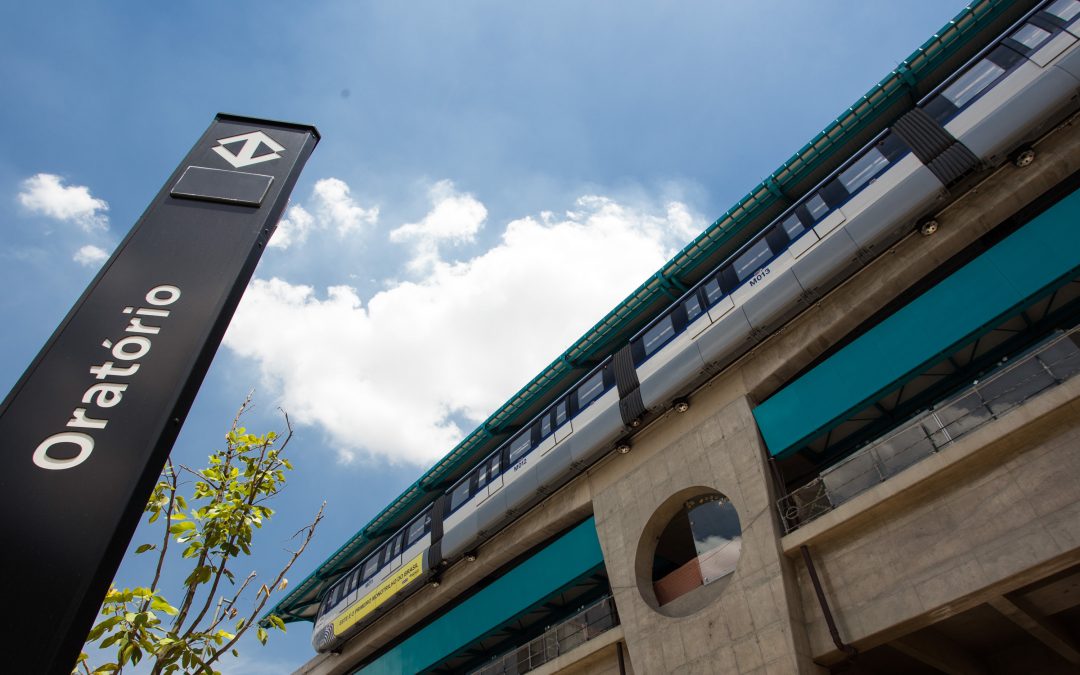
- Featured photograph: São Paulo Line 15-Silver monorail at Oratório station, photographed on 10 January 2014 by Diogo Moreira / A2 Fotografia for Governo do Estado de São Paulo; Wikimedia Commons source, CC BY 2.0. WordPress may scale the photograph for display. Illustrative historical photograph only, not the 2026 accident or video footage.
Recent Comments