
Five hours to control a foundry fire. A reported transformer explosion. And one question worth asking at every plant: would the first warning reach an engineer before the flames reached the raw materials?
On 28 October 2026, news organisations reported a major fire at a foundry near Bhachau, Kutch, Gujarat, India. Local broadcaster GSTV identified the site as Oriental Foundry near Chopadva village, a facility making material for trains, and said crews fought the fire for about five hours. GSTV reported no casualties and said firefighters had protected an estimated 70% of the material on site. These are the broadcaster’s reported figures, not findings from a completed incident investigation.
Hindustan Times published video on 28 October under the headline Transformer Explosion Triggers Fire, saying a transformer had reportedly exploded and the blaze spread to raw materials. The local report confirms a severe fire and the five-hour response but does not independently establish a transformer fault as its cause. The equipment involved, ignition sequence and precise time of onset remain unverified in the reports reviewed. That distinction matters: a spectacular blaze is evidence of a fire, not a completed root-cause analysis.
Watch the incident coverage: Hindustan Times — video published 28 October 2026; GSTV — local Gujarati-language report with video, 28 October 2026. These are links to the publishers’ own video pages; CANS neither owns nor re-uploads the footage. The publisher’s source footage and camera provenance have not been independently established, so the clips are treated as news coverage rather than forensic evidence.
When a transformer is blamed, check the chain of events
An industrial transformer can suffer internal electrical faults, insulation deterioration, overheating or external supply-side faults. An oil-immersed unit has very different failure mechanisms and protection requirements from a dry-type transformer or a small distribution unit. A visible flash or a loud report does not tell us which mechanism occurred, nor whether the transformer was the ignition source, a casualty of another fire or simply nearby.
Engineers should establish the first-out sequence: upstream feeder and transformer relay targets; breaker trip and lockout timestamps; voltage and current disturbances; transformer temperature, cooling and oil-level records where applicable; fire and smoke detector activations; and the first operator and emergency-response actions. Preserve raw disturbance records and time synchronisation. A SCADA alarm list that simply says ‘power failed’ will not reconstruct the initiating event.
The video is a reminder that the consequences of an electrical fault depend heavily on what is stored beside the equipment. Cable routes, combustibles, separation distances, fire barriers and access for firefighters matter just as much as the quality of a dashboard. Fire-risk assessment should cover the entire path from incoming electrical supply to adjacent materials and process areas.
What a similar factory can check before the next incident
The practical investigation starts with equipment classification and protection design, rather than buying an AI box. Ask the responsible electrical engineer to verify feeder overcurrent and earth-fault protection, relay coordination, breaker condition and trip testing against the actual installation. For relevant liquid-immersed transformers, review oil and winding temperature indications, cooling-system status, oil-level instruments, gas or pressure devices and dissolved-gas analysis (DGA) as appropriate to the design. IEC 60076-22-1 covers protective devices for liquid-immersed power transformers; IEEE C57.104-2019 provides guidance on interpreting gases in mineral-oil transformers. Neither standard means every small industrial transformer requires every listed sensor.
A useful trend combines load current, load variation, ambient and transformer temperature, cooling equipment operation, measured electrical disturbances and inspection history. Deviations are meaningful only when compared with the equipment’s rating, site conditions and established baseline. An overheating connection may be found by planned thermography and testing; an internal fault may develop too rapidly for a software alarm to avert damage. There is no universal threshold that can be copied safely from another plant.
How CANS solutions could reduce a similar risk
CansNEXUS, PLC/SCADA integration and a CMMS workflow can connect the parts of an electrical-risk programme that are too often isolated. Existing protection relays, power meters, temperature instruments, cooling-fan status and approved condition-monitoring devices can feed timestamped alarms, trends and equipment history. With appropriate OT network design, CansNEXUS could help a maintenance team see sustained overload, unusual temperature rise, repeated protective alarms, a failed cooling fan or an overdue inspection before an avoidable problem becomes an emergency.
The workflow is more important than another colourful screen. A critical alarm needs an equipment ID, accountable recipient, escalation period, acknowledgement, work order, evidence of inspection and closure. The system should correlate electrical and process events without conflating an upstream trip with a motor fault. CANS industrial automation and SCADA engineering can address instrumentation and alarm integration; CansNEXUS can provide the monitoring, diagnostics and maintenance-data layer. Motor-health measurements may be relevant to neighbouring pumps and fans, but they are not a substitute for transformer protection.
Independent protective action remains essential. Correctly selected protection relays, circuit breakers, pressure-relief or other transformer-specific protective devices, fire detection/suppression and physical safeguards must operate through properly engineered safety and electrical protection systems—not depend on a cloud dashboard, AI inference or an operator noticing a trend. A digital twin can support asset context and drills; it cannot extinguish a fire.
Could such integration have stopped the Gujarat incident? There is no evidence to make that claim. The root cause has not been established publicly in the sources reviewed, and CANS was not involved with the facility. The defensible proposition is narrower: for a similarly exposed plant, integrated condition records, correctly designed alarms, documented maintenance and independent protection can improve detection, response and accountability.
A ten-minute management question that may expose a large gap
Ask the maintenance manager to produce the last three transformer-related alarm events and show, for each, the source instrument, timestamp, operating context, technician response, work-order reference and verified close-out. Then ask the electrical protection engineer for the last tested trip path. If either record cannot be produced, the site has a visibility or assurance gap worth investigating. Do the review under normal safe procedures; never test a live trip or bypass a protection device as an informal experiment.
For an independent plant review or a practical monitoring and alarm-integration scope, contact CANS or send a WhatsApp enquiry. Bring the single-line diagram, installed relay list, existing historian tags and maintenance evidence. We will start with what the plant already has before proposing additional hardware.
Sources, video and photograph attribution
- Hindustan Times, 28 October 2026 — news video and reported transformer involvement; initial cause is not independently verified.
- GSTV, 28 October 2026 — Gujarati local foundry fire report and video; firefighting duration and material-saving figures attributed to this broadcaster.
- IEC 60076-22-1:2019 — scope and requirements for protective devices on liquid-immersed power transformers.
- IEEE C57.104-2019 — interpretation of gases generated in mineral-oil-immersed transformers.
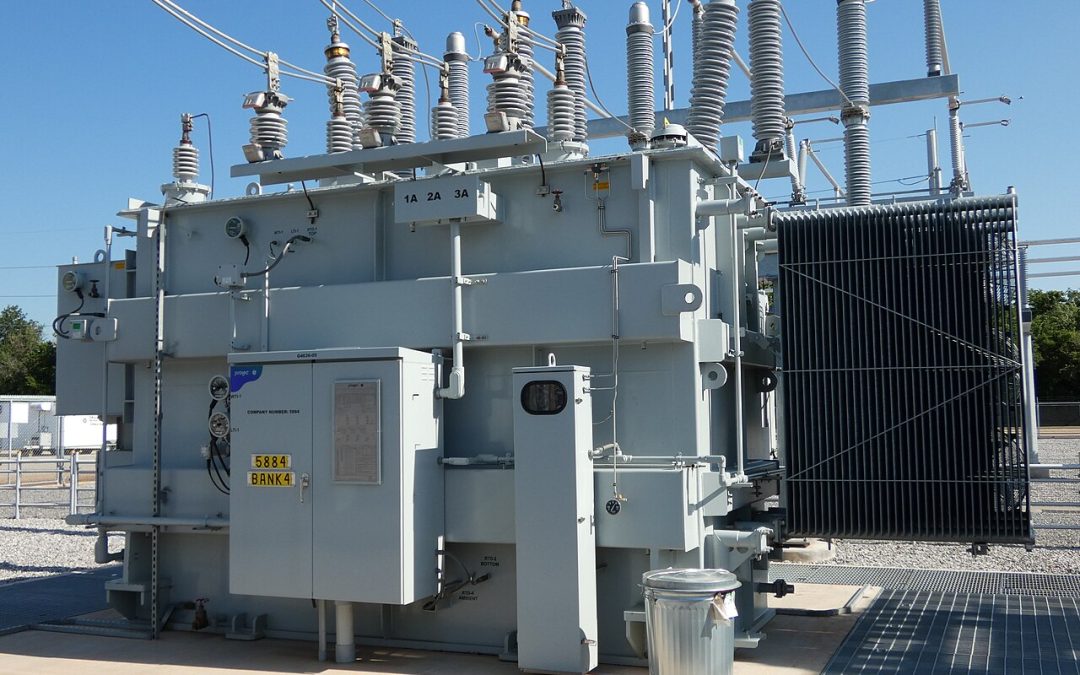
- Featured photograph: A 138/12.5 kV substation transformer photographed by Yoshieslunchbox / Wikimedia Commons, 16 June 2024, licensed CC BY-SA 4.0. Illustrative image only: not the Gujarat foundry, the equipment reportedly involved, or the October 2026 fire. The website uses a resized copy.
Recent Comments