
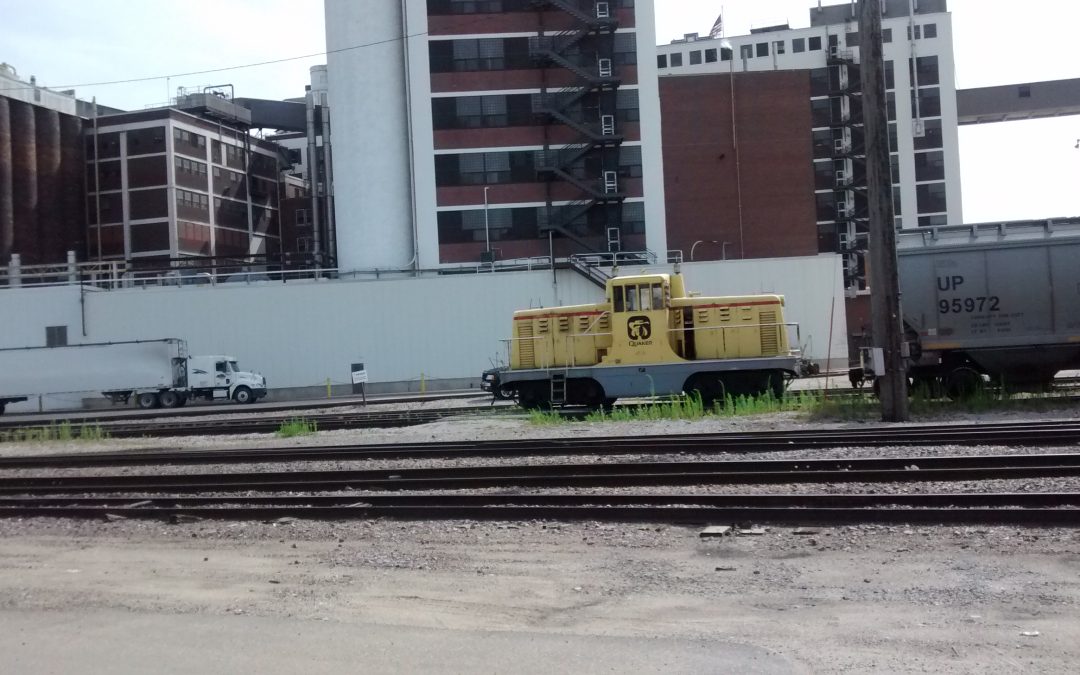
An explosion was reported at one of the world’s largest oat-processing plants on Saturday, 24 October 2026. Firefighters arrived to find flames and heavy smoke at the Quaker Oats complex in Cedar Rapids, Iowa. Everyone was accounted for, with no reported injuries. The cause is still under investigation. That combination — a real industrial blast, fortunately no casualties, and a cause nobody can yet substantiate — deserves more attention than a dramatic video caption.
At approximately 4:44 p.m. local time, dispatchers received a report of fire and explosion at the downtown facility. The City of Cedar Rapids’ emergency-service statement, reproduced by KCJJ on 24 October, records heavy smoke and flames on the building’s north side, mutual-aid response and safe evacuation. Limited internal overhaul continued after 6:25 p.m. Quaker’s parent company PepsiCo also confirmed that employees were accounted for. The company describes this site as processing more than two million pounds of oats a day under normal operations; that is a description of the site’s scale, not a claim about its output after the fire.
Watch the actual incident coverage: KCRG-TV9’s 24 October 2026 local video report and KCRG’s 26 October fire-department update video. These are the broadcaster’s own video pages. The available reporting shows the fire and its aftermath; it does not establish that the camera captured the initiating explosion or its cause. A Cedar Rapids Fire Department video was also linked by the local KCJJ report; it remains the fire department’s footage, not a CANS video. We link to publishers and authorities rather than copy their footage.
The most important fact: investigators have not identified the cause
The 26 October KCRG update said responders found indications of an explosion and that the fire’s cause remained under investigation. The Associated Press reported that the affected area handled products and that employees had escaped. Neither account identifies the first failed machine, a defective electrical circuit, a dust-collection fault or an ignition source. An explosive event at a grain-processing facility is not, by itself, proof of a combustible-dust explosion.
For plant engineers, the useful question is therefore conditional: if an abnormal process or mechanical condition had developed ahead of the event, what evidence would the plant have needed to see it? We cannot assume such a warning existed at this facility, and we certainly cannot claim that CANS could have prevented this particular incident.
Food plants can have hazards you cannot see from the control room
Oat, grain, flour, feed and other dry-material processes have well-established risks from combustible dust, hot bearings, slipping belts, mechanical friction and loss of dust extraction. These are general engineering hazards, not reported findings about Quaker’s October fire. The US Occupational Safety and Health Administration’s grain-handling standard, 29 CFR 1910.272, addresses dust control, inspection and preventive maintenance in covered operations. Specific bucket-elevator provisions depend on facility type and exemptions; they should not be copied indiscriminately into an oat mill specification.
One particularly practical requirement in the standard is to correct malfunctioning dust collection and overheated bearings or slipping and misaligned belts. For certain covered grain elevators, it also specifies bearing-condition monitoring arrangements, motion-loss shutdown and belt-alignment protection. The lesson is the separation of measurement, alarm and protective action — a dashboard alone is not an explosion-protection system.
For comparison, the US Chemical Safety Board’s 2026 safety video about the 2017 Didion Milling disaster examines a separate, investigated combustible-dust event. It is useful for hazard education, but it must not be presented as an explanation of what happened at Quaker Oats in 2026.
How CANS solutions could reduce similar risks
1. Watch the equipment that can develop trouble. On suitable conveyors, motors, fans and bearing assemblies, properly selected vibration sensors, bearing-temperature sensors, motor-current measurements and drive diagnostic signals can indicate deterioration or abnormal load. PyXis condition monitoring and a CansNEXUS monitoring layer could combine such measurements with operating state, trends and maintenance history. The actual diagnostic value depends on sensor placement, baseline quality, sampling, access to the equipment and validation against failure modes; no software predicts every failure.
2. Know whether dust extraction is really working. A fan’s ‘RUN’ contact is not proof of adequate extraction. Where engineering design calls for it, monitor filter differential pressure, airflow or duct pressure, fan condition, relevant damper state and alarms against a commissioned operating envelope. Record how production responds when extraction is impaired. Correct hazardous-area instrumentation, electrical classification and dust-control design require specialist assessment.
3. Make warnings lead to action. CANS PLC/SCADA integration could bring process diagnostics, motor condition, conveyor state and approved gas/fire-system status into a coherent operator display. Alarm rationalisation should identify the responsible person, required response and escalation if an abnormal state persists. For genuinely hazardous situations, the trip must be implemented in the appropriate independent, engineered protective system, not delegated to a cloud dashboard, general-purpose AI or routine data historian.
4. Close the inspection loop. A CansNEXUS-integrated CMMS workflow could attach work orders, inspections, thermography, lubrication records and evidence of corrective action to the exact asset. OEE and production-event records can help separate routine downtime from repeated abnormal trips. This gives management a way to ask whether an alarm was acknowledged, whether a defect was repaired and whether a recurring issue is still unresolved.
5. Make post-incident evidence retrievable. Time-synchronised PLC events, historian values, maintenance records and change logs support engineers investigating a sequence of failures, where surviving data are available. They do not replace forensic investigation or establish causation by themselves.
A useful check before the next shift
- Pick one critical conveyor, elevator, extraction fan or motor. Can you show its latest inspection, sensor condition and open maintenance actions without searching through multiple spreadsheets?
- With the plant in a safe, authorised test condition, prove the required loss-of-motion, abnormal-temperature or extraction-failure alarm and the independently designed protective response. Document the result, not merely the existence of a PLC tag.
- Review repeated nuisance alarms and overrides. An alarm routinely ignored is almost as useful as an alarm never installed.
- Ask whether the relevant electrical installation, dust control, explosion isolation/venting or suppression, housekeeping and emergency procedures are appropriate for the actual site hazard. Monitoring is one layer, never the entire barrier.
The Cedar Rapids incident is a reminder that the best industrial digitalisation project is not necessarily the largest dashboard. It is the one that can tell engineers which abnormal condition matters, who must act, and whether the action was completed before the next shift.
For Malaysian and Singaporean manufacturers: CANS can assess how existing PLC/SCADA data, motor-health measurements, CansNEXUS trends and maintenance records could be integrated for a specific line or plant. A site-specific hazard assessment and independently engineered protection remain essential. Contact CANS or enquire on WhatsApp to discuss a practical equipment-monitoring and alarm-review scope.
Sources and media provenance
- City of Cedar Rapids emergency-service statement, reproduced by KCJJ, 24 October 2026.
- KCRG-TV9, 26 October 2026: fire department response and unresolved cause.
- KCRG-TV9 local incident video, 24 October 2026; broadcaster copyright retained.
- OSHA, 29 CFR 1910.272, Grain Handling Facilities (general technical context; not an incident investigation).
- US Chemical Safety Board, 4 February 2026 safety video on the separate 2017 Didion Milling incident.
Featured photograph: historic view of the Quaker Oats plant exterior in Cedar Rapids taken on 19 July 2015, by Crcjfly, Wikimedia Commons, CC BY-SA 3.0. The photo is not from the 24 October 2026 fire. It appears as the featured image only, not duplicated inside the article.
Recent Comments