
24 October 2026 — OT cybersecurity and control-system engineering. On 21 September, the US National Institute of Standards and Technology (NIST) published the initial public draft of SP 800-82 Revision 4, its Guide to Operational Technology (OT) Security. Comments are open until 30 November 2026. This is a draft, not the final revision or a new Malaysian regulatory requirement.
The engineering message is nevertheless useful. A plant does not become secure because somebody installs a firewall between IT and OT. The difficult questions are which devices actually control the process, who can change them, which communications they depend on, and whether production can recover from a failure or a compromised engineering workstation.
What has changed in NIST’s draft?
NIST says Revision 4 expands coverage of building automation, water and wastewater, food and agriculture, freight rail, maritime systems, IIoT and cloud-connected environments. It is reorganised around NIST Cybersecurity Framework 2.0, with more attention to governance, asset management, network monitoring, protection of system-management functions and zero-trust principles. Those changes matter to manufacturing plants where PLCs, SCADA, BMS, remote support and data platforms now share technical dependencies.
The existing final Revision 3 remains the final published edition while Revision 4 is under consultation. Do not present a draft recommendation as a certified design, a legal obligation or proof of compliance.
Six checks an engineering team can perform now
1. Identify every device capable of affecting the process
Inventory more than the obvious PLC CPU. Include remote I/O, safety controllers, drives, industrial switches, gateway modules, SCADA servers, historian collectors, engineering laptops, panel PCs, VPN gateways and vendor-maintained appliances. Record each asset’s purpose, hardware and firmware versions where known, physical location, network segment, maintenance owner and recovery dependency.
Then mark which devices can write to plant equipment. A read-only reporting gateway and an engineering station with unrestricted PLC download rights do not present the same risk. Finding the unmanaged second network port on a controller is often more valuable than buying another dashboard.
2. Put a boundary around engineering and vendor access
Document how a programmer reaches each controller: on-site engineering port, plant engineering workstation, remote desktop, VPN, jump host or an equipment supplier’s support appliance. Remote maintenance should be explicitly authorised, time-bounded where possible, attributable to an individual and recorded at suitable access-control points. Use strong authentication at the remote-access boundary and do not assume a legacy PLC itself supports modern identity controls.
Test the practical exception: when a machine stops at midnight, can authorised maintenance recover it without bypassing the access design? Security arrangements that force technicians to share one permanent administrator account have missed the point.
3. Map the traffic before changing a firewall rule
Draw actual data paths between PLC, remote I/O, HMI, SCADA, historian, MES, time synchronisation, vendor maintenance and cloud/edge collectors. Distinguish cyclical control traffic from engineering services and non-critical reporting. Restrict permitted flows to justified functions, but commission changes against machine operating states and failure cases—not just a connectivity test while the line is idle.
A poorly planned segmentation project can interrupt control communication, alarm reporting or recipe transfer. Prove the intended behaviour during a cable fault, link restoration and loss of the supervisory layer before claiming a new network policy is production-ready.
4. Establish a safe OT network baseline
Use the least intrusive discovery method compatible with the equipment and vendor instructions. For fragile or undocumented controllers, passive observation from an approved mirror port or network tap is often a better starting point than aggressive enterprise-style scanning. Identify routine controller peers, management sessions, protocol families, unusual external destinations and normal traffic patterns over representative production cycles.
Network monitoring must serve maintenance and incident response: an alert without an equipment owner, escalation route or meaningful machine context is mainly an expensive way to collect alarms.
5. Verify that the control system can actually be restored
Back up the recoverable system, not merely a folder labelled PLC. That may mean application source and compiled versions, firmware compatibility, parameter sets, HMI and SCADA configuration, alarm databases, drive settings, network-switch configuration, device descriptions, licences, certificates and the engineering-tool versions needed to open the project.
Store protected copies outside the normal writable plant environment. Restore representative equipment or a safe test environment with authorised personnel; document what cannot be restored without the original supplier. A backup that has never been opened on a compatible engineering workstation is still an assumption.
6. Keep cybersecurity changes subordinate to process safety
Zero trust is an architectural principle, not an instruction to place a fresh authentication handshake in every deterministic PLC scan. Apply identity, approval, segmentation and logging around the people and systems managing the plant; preserve validated real-time and safety functions. Review how patching, certificate expiry, remote session loss, endpoint protection, time changes and network filtering affect machine availability and safe states.
Every material OT security change needs a documented rollback, change window, process owner and acceptance evidence. The safety system must remain independent of general-purpose analytics and external IT services wherever the assessed safety design requires it.
A practical acceptance record
| Control area | Minimum evidence before sign-off |
|---|---|
| Asset visibility | Reviewed device list, network diagram, firmware/ownership register and write-capability classification. |
| Remote access | Approved access path, named user controls, session records and tested emergency maintenance procedure. |
| Segmentation | Permitted-flow matrix and witnessed fault/recovery tests at the machine interface. |
| Monitoring | Documented baseline covering representative operating modes, alert ownership and safe collection method. |
| Recovery | Versioned backups, software/licence dependencies and a recorded restoration exercise. |
| Change and safety | Risk assessment, affected systems, rollback steps, functional test results and authorised handover. |
This matrix is a proposed engineering checklist, not a NIST certification checklist. It is intended to turn high-level guidance into evidence that a plant manager, control engineer and cybersecurity lead can review together.
Where to start in a running Malaysian factory
Start with one production line or critical utility system. Verify its latest known-good controller and HMI backups, diagram the actual engineering access route, identify any internet-reachable interface and agree on which process interruptions are unacceptable. Use those findings to scope a proportionate improvement plan. Plant-wide architecture can follow; indiscriminate network scanning or rushed firewall replacement should not be the opening move.
The NIST consultation is still open, so engineers with difficult legacy-platform, safety or availability constraints can also submit precise feedback through the official Revision 4 publication page before 30 November 2026. In particular, practical evidence about legacy protocols and maintenance procedures is more useful than broad statements that security is important.
Engineering support from CANS
CANS works across industrial automation, PLC and SCADA integration, embedded electronics and OT communications and engineering architecture and consultancy. For a controls-network review, brownfield gateway project or structured PLC/SCADA recovery and integration assessment, contact CANS or send a WhatsApp engineering enquiry.
Primary technical sources and photo rights
- NIST, SP 800-82 Rev. 4 Initial Public Draft, published 21 September 2026; public comments due 30 November 2026.
- NIST, announcement and summary of changes, 21 September 2026.
- NIST, SP 800-82 Rev. 3 (Final), published September 2023; existing final OT security guide.
- NIST Cybersecurity Framework 2.0, framework reference for the draft’s revised structure.
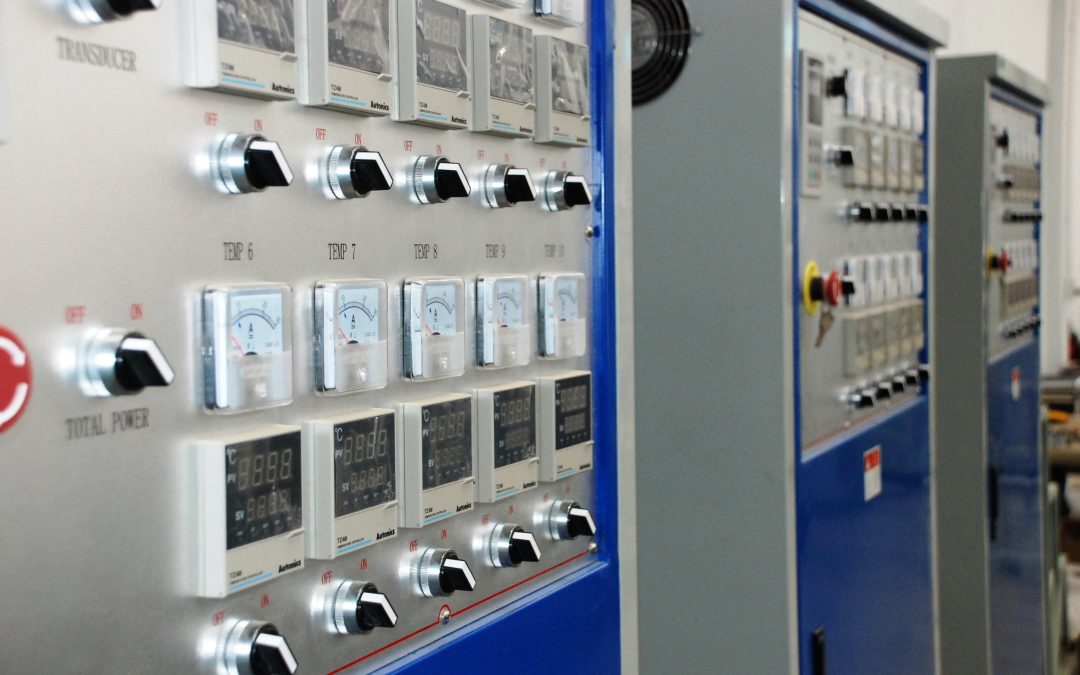
Featured photograph: Control cabinets 2 (9 April 2014), photographed by Poly-protech. Original file and attribution on Wikimedia Commons; Creative Commons Attribution-ShareAlike 4.0 (CC BY-SA 4.0). Illustrative industrial control cabinets, not an identified CANS installation or an image of a cybersecurity incident. No editorial modification to the original photograph. The image is used as the featured photograph only, not repeated in the article body.

Recent Comments