
21 October 2026 | CANS engineering analysis. Industrial Transformation ASIA-PACIFIC (ITAP) 2026 takes place at Suntec Singapore on 21–22 October. The programme addresses physical AI, robotics and the move from pilot projects to deployed industrial applications. Worth discussing. But a factory still needs to sign off the machine behaviour, production records and support arrangements before a model is allowed near live operations.
For manufacturers evaluating AI inspection, predictive maintenance, scheduling or a digital twin, the practical question is not simply whether a demonstration works. It is: what measurable evidence would justify acceptance on the actual production line? The following six tests are a suggested engineering acceptance framework, not an official ITAP checklist or a claim about a CANS installation.
1. Verify the machine data before interpreting it
Test: Trace one real order and a sample of machine cycles from PLC or controller, through the edge gateway, into SCADA, MES and the AI input. Verify equipment identity, tag meaning, engineering units, clock synchronisation, quality flags, recipe revision and what starts and ends a cycle. Reconcile good, reject and total counts against the physical line and production record.
Acceptance evidence: A documented data dictionary and interface contract; event-to-record trace; agreed clock accuracy and maximum latency; defined treatment of missing, repeated and out-of-order events. Tolerances must come from the process requirements, not a universal number.
In older factories, a tag called Running may mean motor energised, cycle in progress or merely that no fault is active. An optimiser cannot rescue a definition that was never agreed. The ISA-95/IEC 62264 framework structures manufacturing and enterprise-system interfaces, but each plant must still define its data semantics.
2. Test the model against actual production variation
Test: Use a withheld validation set covering product variants, shifts, material lots, recipe revisions, normal operating changes and plausible faults. For vision inspection, quantify false accepts and rejects by defect class. For condition monitoring, test detection lead time and nuisance alarms. For scheduling, compare recommendations against real capacity, changeover and material constraints. Keep training, tuning and final acceptance data separate.
Acceptance evidence: Representative, approved datasets; versioned model and preprocessing; performance by operating condition; agreed failure costs and pass criteria. High headline accuracy does not help if the model misses a critical defect or generates so many alarms that operators stop responding.
NIST’s AI Risk Management Framework supports testing, measurement, monitoring and documented risk management. It does not set a universal acceptable AI defect rate for manufacturing.
3. Inject faults and prove the control boundary
Test: Disconnect the network, delay messages, restart the AI service, and feed stale or contradictory input. Demonstrate what happens during loss and restoration of service. Confirm the operator can identify degraded operation and that machine permissives, emergency stops and other protective functions remain independent of a general-purpose model.
Acceptance evidence: A recorded fault-injection matrix, defined timeouts, tested fallback and recovery, and machinery-specific safety validation where applicable. An advisory AI service should not stop safe conventional PLC control from continuing when the analytics server disappears. Applications that influence physical control need a separate hazard and safety assessment.
Deterministic control does not become optional because the dashboard has acquired a neural network.
4. Reconcile every MES and quality handshake
Test: Walk through order release, recipe selection, start, good part, reject, rework, interrupted batch, restart and completion. Check edge buffering, retries and acknowledgements during an MES outage. Deliberately replay a message and verify production cannot be silently counted twice.
Acceptance evidence: One authoritative record of order, lot or serial, recipe revision and inspection decision; durable event identifiers; exception handling; and reconciled production totals. Agree OEE definitions before attributing gains to AI.
For plants linking legacy equipment with MES and ERP, CANiS integration middleware is a relevant CANS capability to assess. Its suitability depends on the equipment interfaces, network architecture and transaction requirements.
5. Verify OT security and disaster recovery
Test: Review each communication route, remote-access path and credential between the AI workload and the control network. Check segregation, permitted ports, least privilege, logs, updates and model-change permissions. Restore system configuration and representative data from backup. Confirm that a compromised analytics node cannot become an unauthorised PLC programming route.
Acceptance evidence: An approved network and trust-boundary diagram; access register; risk-appropriate vulnerability assessment; backup and restore records; rollback and incident ownership. NIST’s Guide to Operational Technology Security, SP 800-82 Rev. 3 explicitly addresses OT’s reliability, availability and safety constraints. The IEC 62443 family is also relevant to industrial cybersecurity and service-provider practices.
6. Prove operating value, ownership and rollback
Test: Run the AI feature in shadow or advisory mode against a defined baseline. Measure the same production indicators before and after, with consistent loss accounting. Depending on the use case these may be reject escape, nuisance alarms, output, schedule adherence, changeover loss, downtime or engineering hours. Conduct a supervised model update, simulated drift detection and rollback to the last approved version.
Acceptance evidence: Signed KPI definitions and baseline; independent review of results; dataset and model versioning; a named process owner; thresholds for ongoing monitoring; documented change control; and support, licence and lifecycle cost. A pilot that saves two minutes on one cycle is not yet a business case.
What to ask suppliers at ITAP 2026
Ask what real equipment and data validated the claimed results, which decisions are advisory and which can actuate equipment, how the service behaves offline, which system owns the production record and how a model can be replaced without losing traceability. Request the acceptance-test template and an anonymised exception log, not just the demonstration video.
CANS covers PLC/SCADA engineering, AI vision, CansNEXUS digital twins and industrial AI, and industrial digitalisation. These are engineering capabilities to assess, not assertions of an ITAP deployment or guaranteed outcome.
Discuss a practical factory acceptance plan: Contact CANS or WhatsApp CANS.
Sources and image rights
- Industrial Transformation ASIA-PACIFIC, official ITAP 2026 programme, 21–22 October 2026.
- Suntec Singapore, ITAP/GAMS 2026 event information.
- International Society of Automation, ISA-95 enterprise–control system integration (including the 2025 Part 1 update).
- NIST, AI Risk Management Framework 1.0 (2023).
- NIST, SP 800-82 Rev. 3: Guide to Operational Technology Security (2023).
- IEC, IEC 62443-2-4:2023, Security program requirements for IACS service providers.
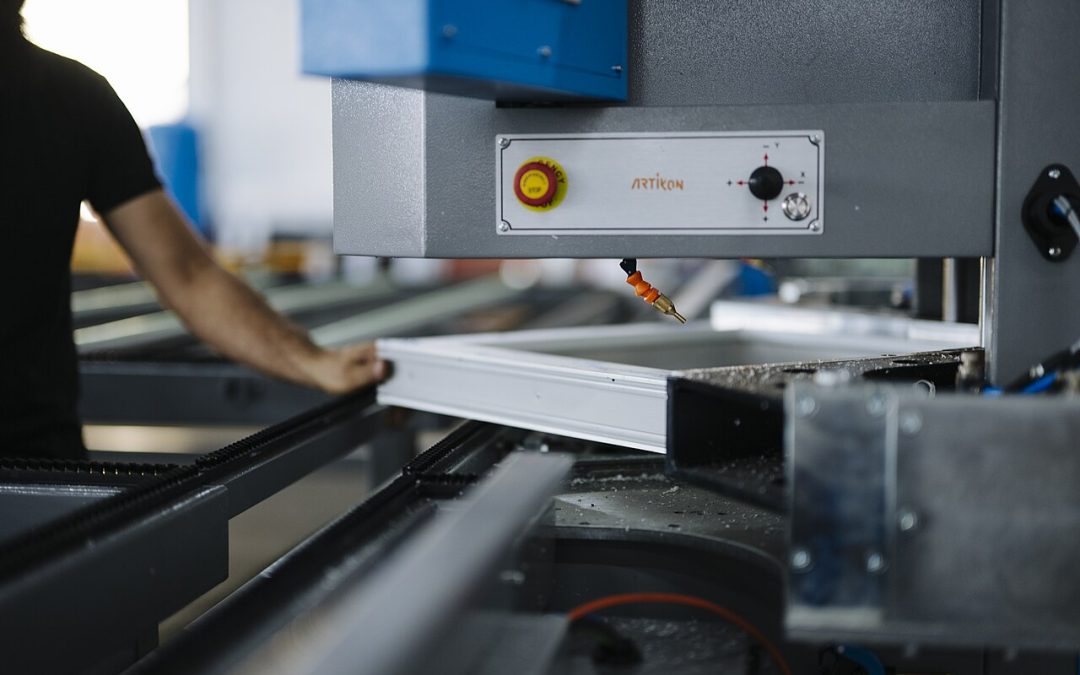
Featured photograph: “Worker operates machine in factory to process material”, Nenad Stojković (Wikimedia Commons user Shixart1985). Original/source. Licence: Creative Commons Attribution 2.0. Illustrative factory photograph taken June 2026, not ITAP or a CANS deployment; used only as featured media, not duplicated within the article body.

Recent Comments