
A 600 MHz microcontroller is fast. A 600 MHz microcontroller that uses MRAM for its programme memory and integrates EtherCAT, time-sensitive networking (TSN) and CAN FD is a more interesting proposition. On 22 October 2026, Japan’s Renesas Electronics announced the RX74M and RX74N, the first 22 nm and embedded-MRAM devices in its established RX family. The new RX74M is aimed at motion drives, PLCs and industrial robots; the related RX74N targets broader industrial and building-control applications. These are released products, not a university prototype. Renesas’s 22 October announcement and RX74M product specification establish the principal claims.
The newsworthy part is not simply the higher clock. It is the possibility of reducing a controller’s separate programme-memory, industrial-networking and security-support circuitry while retaining a deterministic embedded architecture. Whether that actually saves board area, engineering hours or commissioning time depends on the product variant, software stack and qualification work. Those outcomes have not been independently established for a particular plant.
MRAM changes the firmware engineer’s assumptions
Renesas specifies up to 1 MB of code MRAM with dual banks, 48 KB of data MRAM, 1.5 MB of ECC-protected SRAM and 256 KB of zero-wait-state tightly coupled memory (TCM), paired with a 600 MHz RXv3e core. The family also offers lower-frequency variants. Unlike conventional embedded flash, MRAM does not require a separate erase cycle before a write. That matters to controllers that need to update parameters, record events or receive new firmware without lengthy erase/programme sequences.
However, erase-free does not mean power-fail-proof. A field device still needs versioned records, CRCs or another integrity mechanism, a defined brownout strategy and an update/rollback state machine. Dual banks can support a sound architecture, but the bootloader and validation policy must implement it. Engineers should verify write endurance, worst-case write timing, retention, memory protection and reset behaviour from the applicable device datasheet and hardware manual before promising lifetime logging or zero-downtime updates.
Three network worlds, one industrial controller
The RX74M includes an EtherCAT slave controller, a TSN-capable Gigabit Ethernet switch and CAN FD peripheral support. Renesas positions this for equipment communicating across EtherCAT, PROFINET, EtherNet/IP and CAN-based field devices. It could change the design of a motor drive, remote I/O module or condition-monitoring node that previously needed a separate networking processor or dedicated interface chip. The 22 October TECH+ semiconductor report independently describes the integration.
There are important engineering qualifications:
- EtherCAT slave is not an EtherCAT master. Your application role, required stack, certification and hardware interface still matter.
- TSN-capable silicon does not make a network deterministic by itself. Time synchronisation, traffic scheduling, switch configuration, diagnostics and worst-case load testing still have to work together.
- CAN FD is not CAN XL. The CAN controller still needs the correct external transceiver, termination, EMC design and, where required, galvanic isolation. A CAN FD label does not establish CAN XL interoperability.
- Choose the actual orderable variant. Renesas’s RX74M parameter table lists different clock options, memory sizes and EtherCAT channel configurations; the related RX74N product page lists no EtherCAT interface. A family headline is not a bill-of-materials specification.
For an automation designer, the distinction between controller capability and qualified network behaviour is the difference between a convincing evaluation board and a product you can install in hundreds of machines.
A subtler change: security becomes part of silicon selection
Renesas identifies a Protect Zone function to separate secure and non-secure execution regions and an expanded security IP block for cryptographic operations. The company also refers to European Cyber Resilience Act requirements and future post-quantum cryptography needs. These features can assist a defensible product-security design; they are not evidence that any finished controller is CRA-compliant, post-quantum secure or safety-certified.
Production firmware still requires an authenticated update chain, protected keys, debug-port controls, asset inventory, vulnerability handling and a maintained patch process. For drive and machinery products, functional-safety assessment is separate from cybersecurity feature selection.
What I would test before designing a board around it
For a Malaysian machine builder or control-panel OEM considering a fresh industrial controller, the useful comparison is a working prototype under representative load, not a MHz comparison in a slide deck. Run the normal control task while exercising simultaneous network traffic; measure interrupt-to-output latency and jitter; interrupt a parameter write and a firmware update at carefully controlled power states; and validate startup, recovery, EMI/EMC exposure and thermal margin. Repeat using the intended toolchain and production protocol stacks, not only the evaluation example.
The published product specifications give a 1.62–3.63 V supply range and a −40°C to +125°C junction-temperature range. Junction temperature is not permission to run the enclosure ambient at 125°C. Check junction rise, board copper, load and enclosure conditions. Where multiple Ethernet protocols or PHY options are contemplated, verify the specific device/package pin-out and actual peripheral routing. Independent application-level latency and power benchmarks remain limited at this early stage; Renesas’s performance and integration figures are manufacturer claims until reproduced in the intended design.
How CANS engineering could apply this to a real machine
CANS would not simply replace a PLC with an RX74M. For a new OEM controller, retrofit interface or machine-health node, the sensible scope begins with an I/O and timing requirement, protection study and communications architecture.
For example, a custom node might acquire motor current, temperature, encoder or vibration data, carry timestamped events over CAN FD or industrial Ethernet, and forward validated process and diagnostic information through an existing PLC/SCADA integration layer. CANS industrial automation and SCADA integration could handle protocol mapping, alarms and deterministic interfaces. CansNEXUS could then provide trends, event correlation, OEE/downtime context or maintenance traceability. Network traffic and stored events must preserve timestamps, quality flags and device identity if an engineer is to investigate a fault afterwards.
The layers have different responsibilities: embedded firmware acquires data and controls local behaviour; PLC/industrial communications manage machine interfaces; CansNEXUS provides supervisory analytics and evidence; and independent protective hardware and safety-rated functions retain authority for hazardous-motion stops and electrical protection. An AI dashboard, a faster MCU or an MRAM log cannot guarantee prevention of an injury, uncontrolled movement or electrical fault.
For OEMs assessing an RX74M-based design or an industrial CAN/EtherCAT gateway, CANS can help specify the interface, build a proof-of-concept, test interoperability and plan maintainable field diagnostics. Contact CANS or enquire on WhatsApp with your protocol, I/O, isolation and timing requirements.
Sources, evidence and image credit
- Renesas Electronics, official launch, 22 October 2026 — launch, MRAM architecture, industrial networking and vendor-positioned capabilities.
- Renesas RX74M official product page — device-family functions, package and variant information, documentation.
- Renesas RX74N official product page — variant distinction, including the absence of EtherCAT in the RX74N parameter table.
- Mynavi TECH+, Semiconductor Team, 22 October 2026 — contemporary independent Japanese semiconductor-industry coverage.
- Igor’sLAB, 23 October 2026 — independent commentary noting that measured real-time/power comparisons and qualification remain to be demonstrated.
Video: No authenticated original RX74M demonstration video was found during verification. This article makes no claim of a recorded benchmark or plant trial.
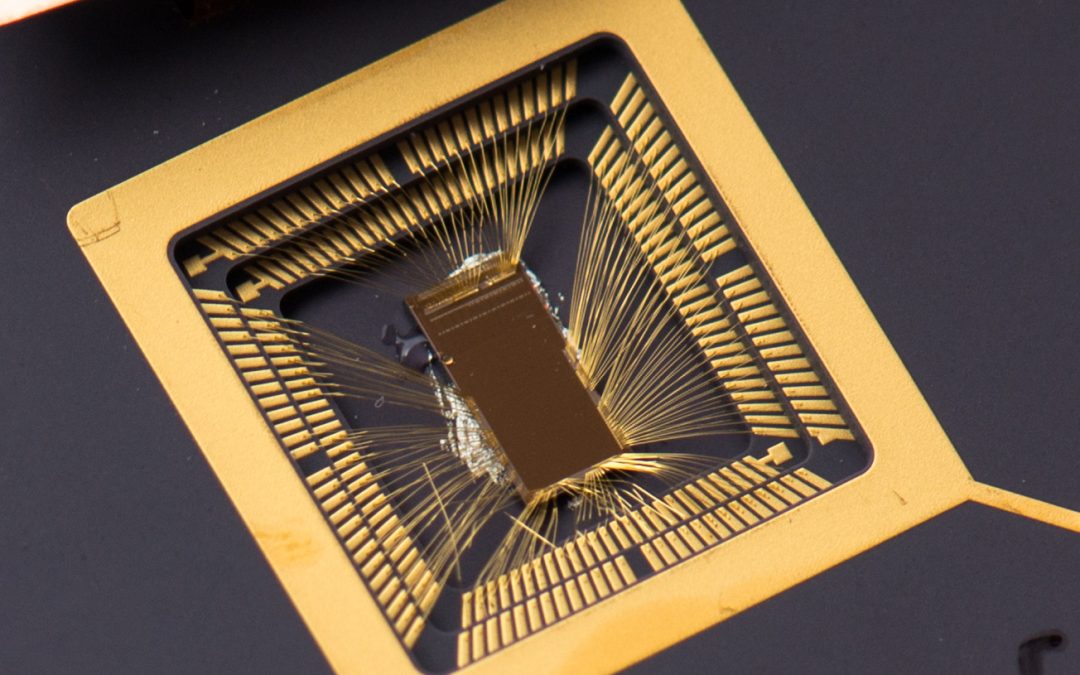
Featured photograph: An illustrative close-up of an early RISC-V prototype chip, not Renesas RX74M/RX74N hardware. Photo by Derrick Coetzee, 2013, Wikimedia Commons, CC0 1.0. No manufacturer endorsement is implied.
Recent Comments