
Japan has put a chainsaw on one arm of a railway-maintenance robot and a gripping claw on the other — and there is a good engineering reason for the arrangement. A report released by ANNnewsCH on 17 October 2026 shows East Japan Railway (JR East) using a vehicle-mounted, human-controlled manipulator to clear overhanging branches near Nobeyama Station on the Koumi Line in Nagano Prefecture. It looks like a giant humanoid, but the important feature is not its shape. It is that a trained operator can work at height from a protected control position.
This is not an autonomous AI chainsaw. The demonstration depicts remote human operation. The distinction matters to anyone designing a robot, remote HMI, mobile maintenance platform or machine-safety system.
The actual machine — and what was demonstrated
The work platform is a multifunction railway maintenance vehicle with a humanoid upper body, tool-changing capability and road/rail mobility. The gripping arm can restrain a branch while the cutting arm removes it. Camera feedback allows a human operator to guide the work without standing next to the cutting tool. That combination solves a real practical problem: maintaining awkward infrastructure close to rail lines and overhead equipment while reducing workers’ exposure to elevated, difficult-to-access tasks.
Watch the original publisher report: ANNnewsCH / TV Asahi, “Humanoid robot reduces burden; railway work shifts from night to day — JR East”, published 17 October 2026. The broadcaster’s published footage is an authentic report about the working machine; individual camera-operator attribution has not been established here. It is a report of operation, not independent evidence of autonomous navigation, safety certification, failure rate or productivity gains. The footage is linked, not downloaded or republished by CANS.
The deployment was not new on 17 October. In an official joint release dated 14 April 2026, JR East and JR West confirmed that JR East had introduced multifunction railway heavy machinery in March 2026. Their collaboration covers smart maintenance and further tool development. The October television report provided a particularly clear public view of the machine doing the job, rather than announcing a fresh invention.
A surprisingly sensible use of humanoid arms
Most factories do not need humanoid robots to replace work that a gantry, dedicated fixture or six-axis arm already performs reliably. This application is different. Railway infrastructure is irregular, outdoor and difficult to redesign around a robot. A vehicle carries the manipulator to the work; interchangeable tools handle different operations; the operator provides human judgement when geometry, vegetation and access vary.
The asymmetric end-effectors are particularly instructive. One arm grips and supports the load; the other performs the hazardous cutting operation. Holding the branch is not incidental: it can help control where the severed material moves, although the actual risk still depends on geometry, load, operator judgement and the work method. A system with two identical grippers would not provide this exact working arrangement without a tool change.
The longer history matters too. JR West started introducing the original multifunction railway machinery in 2024. The 2026 JR East deployment follows railway-operator cooperation; it should not be presented as the world’s first railway-maintenance humanoid. Nor should a manufacturer’s historic projection about manpower savings be confused with an independently measured result at the Nagano job.
Behind the video: what engineers should actually test
The headline visual is a chainsaw. The difficult engineering is the feedback and control loop between the operator and the tool. A credible design review would examine the live camera path, actuator-position feedback, torque or contact-force limits where provided, command latency, communications-loss response, tool-state indication and the sequence for safely recovering an interrupted job. Those are design questions for this class of equipment; the video does not disclose the particular machine’s internal fieldbus, controller architecture or validated stop category.
Consider a simple failure mode: the video feed freezes while the operator’s command channel remains active. Displaying a stale image is not equivalent to showing the operator the machine’s present state. Equally, a link can be alive while latency or packet jitter makes fine manipulation harder. The system design must define independently how an operator command can be inhibited or the hazardous motion brought to a safe state when feedback is invalid. A watchdog on a dashboard is not automatically a safety function.
The same issue appears inside factories: remotely tended presses, tank-cleaning robots, teleoperated inspection crawlers, mobile manipulators and robotic tools placed inside hazardous enclosures. Human-in-the-loop operation may reduce exposure at the work face, but it transfers some operational risk into the control, visibility and response architecture. Good teleoperation is more than adding a camera to a joystick.
How a CANS solution could make similar equipment more dependable
For a machine builder or infrastructure-maintenance operator developing comparable remote equipment, CANS could support the industrial communications and embedded engineering needed to connect controller telemetry to a dependable supervisory layer. Appropriate, measured signals might include actuator position and speed, motor-current or drive-fault trends, tool-enabled state, video-link health, machine mode, operator-control heartbeat, command/feedback timestamps and maintenance counters. Whether CAN, CAN FD, industrial Ethernet or another link is appropriate depends on the verified bandwidth, latency, physical environment and system architecture; nothing in the JR East video establishes which network its machine uses.
Early detection and traceability: CANS PLC/SCADA and system integration can collect operating-state signals, communications alarms and sequence-of-events records. CansNEXUS could correlate them with operator interventions, work-order history, repetitive drive alarms and time-stamped maintenance evidence. A digital-twin view could help supervisors visualise the job zone and inspect abnormal trends; it would not itself validate that a clearance is physically safe.
Risk reduction and recovery: sensible engineering interventions include verified connection-loss behaviour, controlled tool-enable conditions, separation of commanded motion from actual motion, maintenance inspections, tool-change verification, and evidence capture for near-misses. A CMMS workflow can require inspection after abnormal shutdowns. These are examples of functions CANS could integrate for a similar project after a site-specific assessment, not claims about equipment supplied to JR East.
Independent protection: emergency stops, safety-rated motion limits, safeguarded work zones, lockout procedures, rail possessions and any required protective interlocks must be engineered and validated independently of a general SCADA dashboard, historian, digital twin or AI model. A communications heartbeat or AI anomaly score cannot guarantee prevention of cutting injuries, collision or loss of control. The safety case must address the actual machine and operational environment.
The useful conclusion
Japan’s chainsaw robot is compelling because it is so specific. Rather than waiting for a robot to understand the whole railway, the operators give it a difficult physical task and retain direct responsibility for judging what to cut. The lesson for industrial automation is not “replace the operator with AI”. It is remove the operator from hazardous proximity, keep feedback trustworthy, and define exactly what happens when control or visibility fails.
For assistance with an industrial teleoperation, machine-control, embedded communications or plant-monitoring project, contact CANS or send an engineering enquiry by WhatsApp.
Sources, video provenance and image licence
- Original broadcaster video: ANNnewsCH / TV Asahi, 17 October 2026, JR East humanoid railway-maintenance machine in operation. Publisher attribution verified; original cameraman and the machine’s internal safety-control design not independently verified.
- Primary operator release: JR East / JR West joint release, 14 April 2026; expressly records introduction of multifunction railway heavy machinery to JR East in March 2026 and further tool-development cooperation.
- Independent reportage: SoraNews24, 25 October 2026, identifies the Koumi Line location and explains the human-operated work; Tom’s Hardware, 28 October 2026, distinguishes remote control from possible future automation.
- Earlier deployment context: GIGAZINE, 5 July 2024, on the JR West machine and remote-operation arrangement. Equipment specifications there describe the 2024 system, not independent test results of the JR East installation.
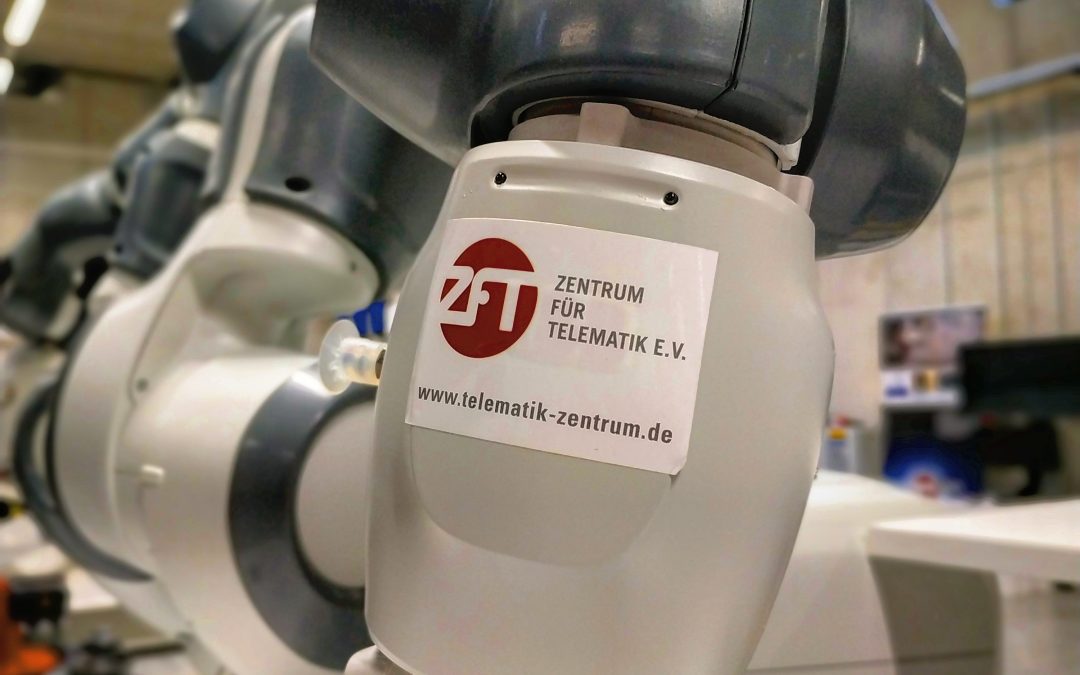
- Featured photograph: “Robotic arm at ZfT”, photographed by Zen4Telematik in 2019, Wikimedia Commons, CC BY-SA 4.0. An illustrative research teleoperation robot photographed in Germany, not JR East’s railway chainsaw robot; reused unmodified, with attribution and licence links. The broadcaster video is not reuploaded.
Recent Comments