
Virtual PLCs are moving from specialist demonstrations into normal industrial product portfolios. Phoenix Contact announced Virtual PLCnext Control on 15 September 2026, adding another major vendor to a field that already includes Siemens SIMATIC S7-1500V and CODESYS Virtual Control SL.
The engineering point is simple: moving PLC execution from dedicated controller hardware to an industrial PC or edge platform can improve deployment and hardware standardisation, but it does not remove the requirements for deterministic control, reliable I/O, recovery and maintainability.
Real-time behaviour comes first
An industrial PC may be much faster than a conventional PLC and still be a poor controller if scheduler jitter or another workload disturbs I/O timing. CODESYS describes its Control for Linux SL as a SoftPLC with soft real-time properties and states that it is suitable for applications without hard real-time demands. Its Virtual Control SL can run on Linux systems with the PREEMPT_RT real-time patch.
For utilities, skids and slower sequencing, software-defined control can be a good fit. General discrete machine control can also work well when the runtime and fieldbus are validated. High-speed motion and very fast coordination need more care and should use a vendor-supported real-time stack proven on the actual hardware.
Consolidation changes the failure domain
An industrial PC can host several controller instances together with HMI, data collection or edge applications. This may reduce hardware variety and cabinet space, but one computer failure can then affect several functions at once. Power, storage, cooling, watchdogs, fieldbus interfaces and recovery therefore matter more.
I would isolate control resources from analytics or AI workloads even when they share the same physical platform. CPU, memory, network interfaces and restart policies should be explicit. Control should not become unstable because another application was updated.
Software lifecycle becomes part of control maintenance
A virtual controller adds an operating system, container engine or hypervisor and controller image to the maintenance scope. Production therefore needs a known-good image, controlled updates, rollback, backups and a tested recovery procedure. I would not enable unattended operating-system or container updates on a production controller.
Safety needs separate treatment. Virtualisation by itself does not make a controller safety-rated. CODESYS Virtual Safe Control SL, for example, is a specific virtual safety product with an IEC 61508 SIL3 architecture. Use the certification and architecture of the actual product rather than assuming that any virtual PLC can perform safety functions.
Where I would use virtual PLCs first
Greenfield modular machines, test cells, pilot lines and production cells that already need an industrial PC for HMI, vision, data collection or edge processing are natural candidates. Machine builders with several related machine variants may also benefit from provisioning controller instances as software instead of stocking several hardware controller models.
Brownfield plants are different. If an existing PLC is reliable and supported, replacing it only because virtual PLCs are fashionable creates work without necessarily creating value. A new skid, extension or parallel cell is usually a better place to prove the architecture.
If a PLC already works, I would leave it alone unless lifecycle, spares, cabinet space, hardware standardisation or deployment speed justify the change. Virtualisation should solve an operational problem, not become the problem.
Malaysia’s AUTOMEX Penang, scheduled for 3–5 November 2026 at Setia SPICE, is focused on industrial automation, smart manufacturing, robotics, machine vision and semiconductor technology. Virtual control increasingly belongs in the same architecture discussion as industrial PCs, edge platforms, remote I/O and plant data systems.
Start with a controlled qualification
- Choose a non-safety application with well-understood timing and failure consequences.
- Run the real control program with the intended HMI, historian, vision or edge workloads active.
- Measure worst-case task execution, jitter, fieldbus latency and network-loss recovery.
- Test reboot, storage recovery and controller-image rollback.
- Freeze the approved software stack and document the recovery image before production handover.
CANS works across PLC and SCADA automation, embedded systems and industrial communications, and industrial data and AI integration. For brownfield plants, our article on modernising SCADA data without replacing reliable control follows the same engineering principle.
Planning a new machine, industrial edge platform or controller refresh? Contact CANS or WhatsApp CANS.
References
- Phoenix Contact — Virtual PLCnext Control, 15 September 2026
- Siemens — SIMATIC S7-1500V Virtual PLC
- CODESYS — Virtual Control SL
- CODESYS — Control for Linux SL
- CODESYS — Virtual Safe Control SL
- AUTOMEX Penang 2026
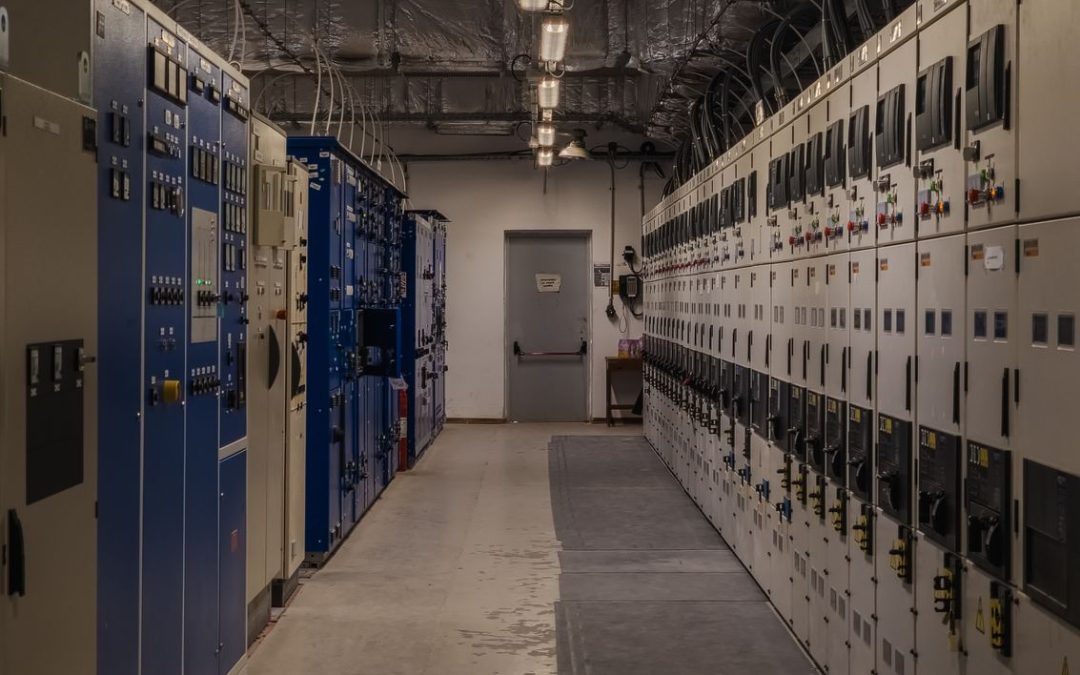
Featured image: Vjanodic WERSOV / Pexels, via the CANS media library.
Recent Comments