
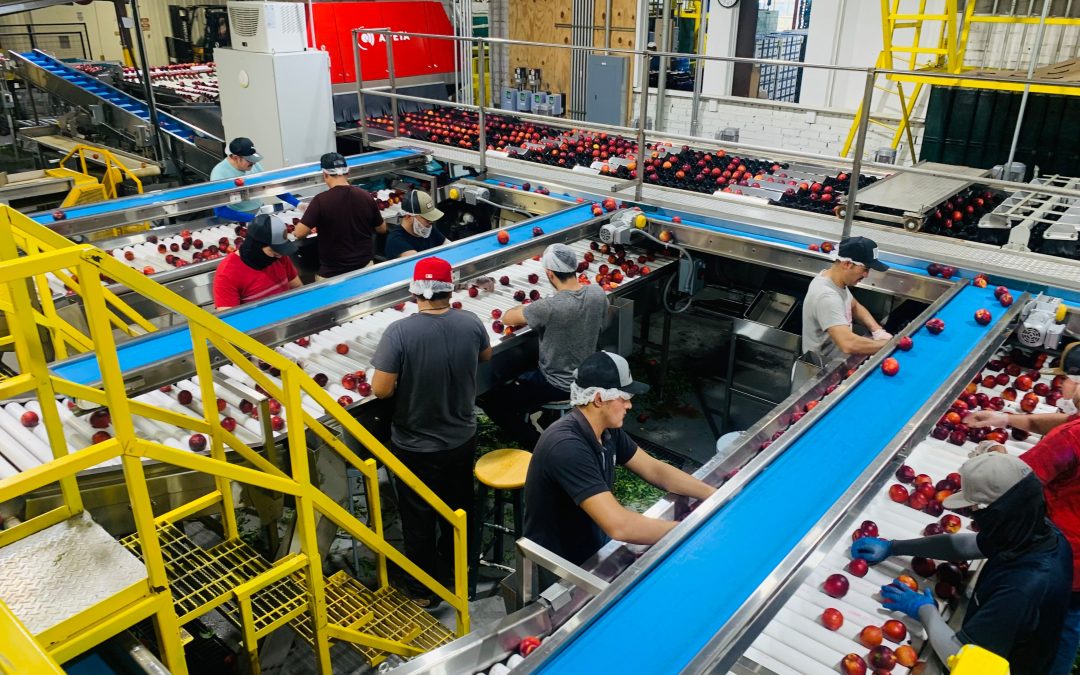
Food plants are a good example of where digitalisation has to earn its keep. Labour is getting more expensive, traceability is tighter, raw materials vary, production windows are short and utilities such as refrigeration, steam and compressed air cost real money. A new dashboard by itself does not solve any of that.
Two current signals show where buyers are heading. On 11 September 2026, Mondelēz International opened a completed RM90 million Crumb Tower at its Cadbury plant in Shah Alam. MIDA said the investment strengthens the plant through greater automation, advanced process technology and improved operational efficiency. In Singapore, the refreshed Food Manufacturing Industry Digital Plan launched on 9 February 2026 now explicitly promotes manufacturing analytics, AI-powered production optimisation and predictive maintenance. IMDA reported that more than 90% of Singapore food manufacturers had adopted at least one sector-specific digital solution by 2025.
Both examples point in the same direction. The next step is not simply more PLCs, robots or standalone machines. It is getting production, quality, maintenance, traceability and energy information to work together instead of sitting in separate systems.
Why food manufacturing needs a different digitalisation approach
Food plants are not discrete assembly lines with identical parts and fixed cycle times. Production may depend on recipe, batch, temperature, humidity, fermentation time, ingredient characteristics, cleaning status, allergen rules and storage conditions. A system that only records machine run and stop signals misses much of the real process context.
For that reason, food manufacturing digitalisation should normally connect five layers:
- machine and process control — PLCs, drives, valves, instruments, weighing, temperature, pressure and flow;
- production execution — work orders, recipes, batches, WIP, material consumption and traceability;
- performance — OEE, downtime, speed loss, reject loss, yield and changeover;
- maintenance and quality — condition monitoring, work orders, inspection, CCP records and deviations;
- energy and utilities — electricity, steam, chilled water, compressed air, refrigeration and water use per unit of production.
CANS already works across these boundaries through industrial automation and SCADA, MES integration, OEE monitoring, condition monitoring and energy monitoring and optimisation.
1. Start with MES where batch, recipe and traceability matter
In food manufacturing, MES creates value when it captures production context that machine controls do not own: what product is running, which recipe is authorised, which raw-material lot was consumed, which batch was produced, whether a hold exists and which finished-goods lot must be traced if a deviation occurs.
Singapore’s refreshed Food Manufacturing Industry Digital Plan provides a strong real-world example. Kwong Cheong Thye implemented MES to monitor critical fermentation variables such as temperature and humidity, streamline scheduling and improve multi-batch planning. IMDA said the system is expected to increase soya-sauce yields from 70% to 90%.
The important lesson is that MES should not become another manual-entry screen. Production data should be acquired automatically from PLCs, instruments, scanners and weighing systems wherever practical. CANS’ CANiS integration middleware is designed for this kind of controlled connection between ERP, MES, WMS and legacy industrial systems.
2. Use OEE to expose losses that automation alone cannot see
A highly automated line can still perform badly. OEE separates the problem into availability, performance and quality, allowing the plant to see whether production is being lost to breakdowns, micro-stops, slow cycles, rejects, changeovers or upstream material constraints.
For food plants, however, OEE should be interpreted with process context. A slower speed may be intentional for a difficult product grade. A long stop may be required for cleaning-in-place. A yield reduction may be caused by incoming raw-material variation rather than the machine itself.
A good implementation therefore links OEE events to product, batch, shift, recipe, sanitation and maintenance data. This converts OEE from a dashboard into an improvement tool.
3. Add predictive maintenance where stoppages destroy product or schedule
Predictive maintenance is especially valuable where a failure creates more than repair cost. A failed pump, mixer, refrigeration compressor, conveyor or packaging machine can also cause lost product, temperature excursions, missed dispatch windows or an incomplete sanitation cycle.
Useful monitoring targets include motors, gearboxes, pumps, fans, conveyors, compressors and refrigeration equipment. Vibration, temperature, current, pressure and operating-state data can be combined to detect deterioration before a trip occurs.
The key design rule is to connect condition monitoring with the actual production context. A vibration level on a mixer means more when the system also knows speed, load, product viscosity and batch phase. CANS discusses the implementation sequence in From Alarm-Driven Maintenance to Predictive Maintenance.
4. Use machine vision for quality, packaging and traceability
Food and beverage plants contain many repeatable visual checks that can be automated: label verification, cap presence, fill level, seal condition, date-code OCR, packaging integrity, foreign-object detection and product-count confirmation.
The strongest architecture is not a standalone camera that only returns PASS or FAIL. Inspection data should be linked to the production order, batch, timestamp and reject action. That creates an auditable quality record and makes trend analysis possible.
CANS’ AI machine vision inspection work combines cameras, edge inference, PLC reject logic and traceability integration rather than treating vision as an isolated subsystem.
5. Measure energy per tonne, batch or case — not only monthly kWh
Food manufacturing can have significant energy loads from refrigeration, heating, steam, ovens, boilers, compressed air, chilled water and clean-in-place systems. Monthly utility bills are too coarse to identify where the real production losses occur.
Energy data becomes operationally useful when it is normalised against output. Examples include:
- kWh per tonne produced;
- steam per batch;
- refrigeration energy per production hour;
- compressed-air consumption per packaging line;
- water per cleaning cycle;
- energy consumed during idle, changeover or sanitation periods.
This also helps Malaysian plants respond more intelligently to energy-efficiency requirements because improvement actions can be tied directly to production conditions rather than generic facility averages.
6. Preserve local control even when analytics moves to the cloud
Food production should not depend on a permanent Internet connection. Core PLC control, safety, sequencing, interlocks and essential production logic should continue locally. Edge gateways or industrial PCs can buffer data, perform protocol conversion and run selected analytics while synchronising higher-level information to cloud systems when connectivity is available.
This hybrid architecture is particularly useful for multi-site manufacturers that want central dashboards or AI analysis without making line operation dependent on the WAN.
Start with the loss you can measure
| Operational problem | Best first digitalisation layer |
|---|---|
| Poor batch visibility or traceability | MES + barcode/RFID + PLC integration |
| Frequent unexplained downtime | OEE + automatic downtime capture |
| Recurring motor, pump or gearbox failures | Condition monitoring + CMMS workflow |
| Packaging or labelling defects | Machine vision + reject traceability |
| High energy cost with unclear causes | Sub-metering + production-context energy analytics |
| Multiple disconnected systems | Integration middleware + common data model |
A small first project is enough
Many plants do not need a multi-year digital transformation programme before achieving useful results. A focused first phase can normally be built around one line or process:
- select one measurable problem such as yield, downtime, traceability or energy intensity;
- connect the required PLC, sensor and machine data without disturbing existing control;
- add the minimum production context — product, batch, recipe, shift or order;
- capture an agreed baseline for several weeks;
- deploy MES, OEE, analytics or condition monitoring against that baseline;
- connect the result to an operator, quality or maintenance workflow;
- measure improvement and document the integration pattern for replication.
This is also where a platform such as CansNEXUS becomes useful: the value is not another dashboard, but a common industrial data and analytics layer that can combine machine, production, maintenance, energy and quality information.
What I take from the current activity
Mondelēz’s Shah Alam investment shows that major food manufacturers in Malaysia are continuing to spend on automation, process technology and operational efficiency. Singapore’s refreshed sector plan shows a parallel policy direction: digital solutions, MES, manufacturing analytics and predictive maintenance are becoming mainstream rather than experimental.
I would start with the loss, not the software. Is the problem yield, downtime, traceability, labour, quality or energy? Once that is clear, it becomes much easier to decide what data is needed and whether the answer is MES, OEE, vision, condition monitoring or something much simpler.
Discuss a food manufacturing automation project with CANS
CANS can assess an existing production line and define a staged architecture covering PLC/SCADA connectivity, MES, OEE, machine vision, predictive maintenance, energy monitoring, industrial IoT and integration with ERP/WMS/CMMS systems.
Send CANS an enquiry or contact CANS on WhatsApp.
References
- MIDA — Mondelēz International unveils RM90 million Crumb Tower investment, 11 September 2026
- IMDA / Enterprise Singapore — Refreshed Food Manufacturing Industry Digital Plan, 9 February 2026
- Enterprise Singapore — Food manufacturers to get boost in digital solutions under refreshed plan, February 2026
- Singapore EDB — Advanced manufacturing and robotics at Coca-Cola Singapore, 10 March 2026
- Pexels — Jonathan David, food processing production-line photograph
Recent Comments