
A spare pair in a junction box gives the design team a reason to survey a loop. Before pricing an Ethernet retrofit, find out which diagnostic the operator needs and whether the installed cable can carry the proposed link. At SPS 2026 in Nuremberg, PROFIBUS & PROFINET International (PI) presented the next step in its programme for running PROFINET over Single Pair Ethernet. Its 23 November announcement gives plant teams a useful reason to separate three different retrofit decisions.
Keep HART when it already carries the diagnostic
Start with the instrument and the operator’s job. A valve positioner may already report a useful device status over a working 4–20 mA/HART loop. Check the exact instrument model, its recorded configuration and the controller interface. If the required diagnostic can reach the operator through the existing loop, test it there first. Record the status seen at the instrument and at SCADA, verify the alarm text and tag, and check how the display handles loss of diagnostic data while the process signal remains available.
Survey the existing cable for an Ethernet-APL pilot
Ethernet-APL uses a single twisted pair for the Ethernet physical link and can supply power under defined port profiles. Cable reuse depends on the complete channel: identify the cable type, actual lengths, junctions, shield and termination condition, prior repairs and routing. Match the proposed trunk or spur to its port profiles, cable limits and power budget. Check the field switch, instrument and control system as a set. Where the area has hazardous-area requirements, have the qualified design team verify the equipment approvals and installation against the area classification; a generic SPE product and an approved installation are different decisions.
FieldComm Group’s migration guidance recommends assessing existing infrastructure and starting with a suitable pilot. Use one representative instrument and a planned cutover window. On an approved test setup, verify stable cyclic values, the required device diagnostics, alarms for link loss or stale data, and recovery after the link returns. Record when SCADA flags the loss and when the value becomes trustworthy again. Keep the validated protective functions independent and document how to restore the old loop.
Check the SPE roadmap before specifying a non-hazardous segment
For a different, non-hazardous factory segment, evaluate ordinary SPE separately. PI says it published revision 3.1 of the APL/SPE port specification in September 2026 and plans first SPE certification for April 2027. PI describes a certifiable PROFINET Ethernet-APL ecosystem already available. Match the exact devices, switch ports, firmware, certificates and power arrangement before procurement. Check the device vendor’s availability separately. See our 10BASE-T1L overview for the broader network choices.
CANS can help with the field I/O survey and staged PLC/SCADA integration, from identifying the desired diagnostic to proving the alarm at the operator station. Contact CANS or WhatsApp CANS to review one representative loop.
Sources: PI’s SPS announcement, 23 November 2026, FieldComm Group Ethernet-APL overview and migration guidance, PI engineering guideline, and IEC TS 63444:2026. The announcement describes the demo; we found no verified public footage of this specific demonstration.
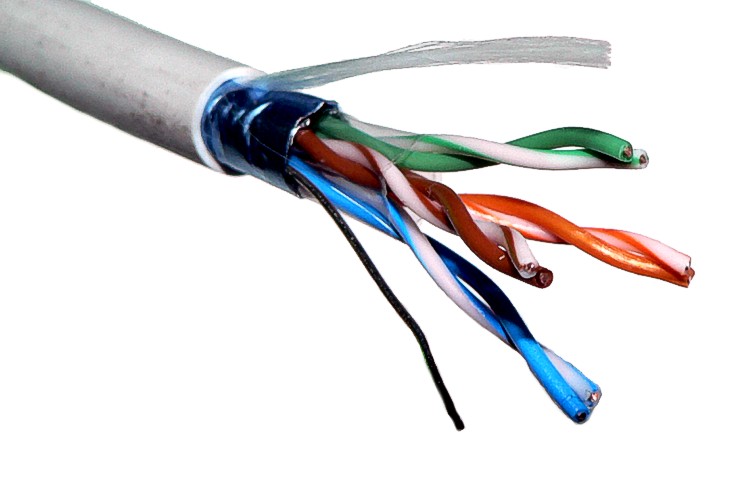
Featured photograph: Baran Ivo, Wikimedia Commons, public domain. This four-pair cable illustrates conductor construction; select cable against the applicable APL or SPE profile.

Recent Comments