
A component reel reaches an electronics factory inside a carton. The factory wants the reel; the robot has to work out which carton it is looking at and how to get the reel out. Standardising the carton would simplify the robot programme. Siemens is trying the opposite approach: keep the variation in incoming deliveries and give the robot a way to interpret it.
In its 24 November SPS 2026 announcement, Siemens described a system it is developing at its Electronics Factory Erlangen. Cameras observe the scene in real time. A robot foundation model interprets the scene and determines what steps to take. The robot opens the carton and removes reels for further processing. Siemens described work in development and did not publish an independently measured throughput, damage rate or range of cartons for the cell.
Why the carton matters more than the robot arm
A conventional programme can repeat an opening sequence when fixtures keep the carton in a predictable position and the packaging does not change. Mix suppliers and the job changes: similar cartons can have different tape layouts; a bowed lid can sit outside the expected plane; and internal inserts can hide the reel. Extra rules can cover known cases, but every exception needs a decision when it appears. A camera-guided system shifts part of that decision to the incoming scene.
The trial should separate three outcomes: finding the usable opening, removing the reel intact and transferring it with the right identity. A cell that succeeds at the first two can still send the wrong reel downstream. Give the inspection and warehouse systems an explicit handover check. Record mismatches with a reason that a shift supervisor can act on.
Test the cartons the shift actually receives
Sample ordinary cartons and the difficult examples people normally rescue by hand. Keep some suppliers and packaging variants out of training or configuration and use them only in the acceptance trial. Compare with the existing process using completed cartons per productive hour, damaged packaging or reels, unread labels, rejected cases, and operator interventions. Record the time to recover each stop. A fast average can conceal a small number of incidents that consume a large share of the shift.
Have the PLC confirm permitted states, such as fixture and conveyor readiness, before the cell proceeds. Give low-confidence or mismatched cases an explicit divert or controlled stop path. Keep access protection and safe stopping under the independent safety design, with commissioning validation separate from model acceptance. Run both tests with controlled samples before any production handover.
Start with one receiving lane
CANS can help define a receiving-lane trial that joins machine-vision results to PLC events and warehouse records. Use the CansNEXUS digital twin and operational analytics to present exception counts and recovery times alongside the cycle trace, so the team can see whether the bottleneck is perception, material presentation or manual recovery. Read our inspection-cell simulation guide for ways to test pose and lighting before the live trial.
Siemens lists its SPS Digital Experience; we did not independently verify public footage of this exact Erlangen cell.
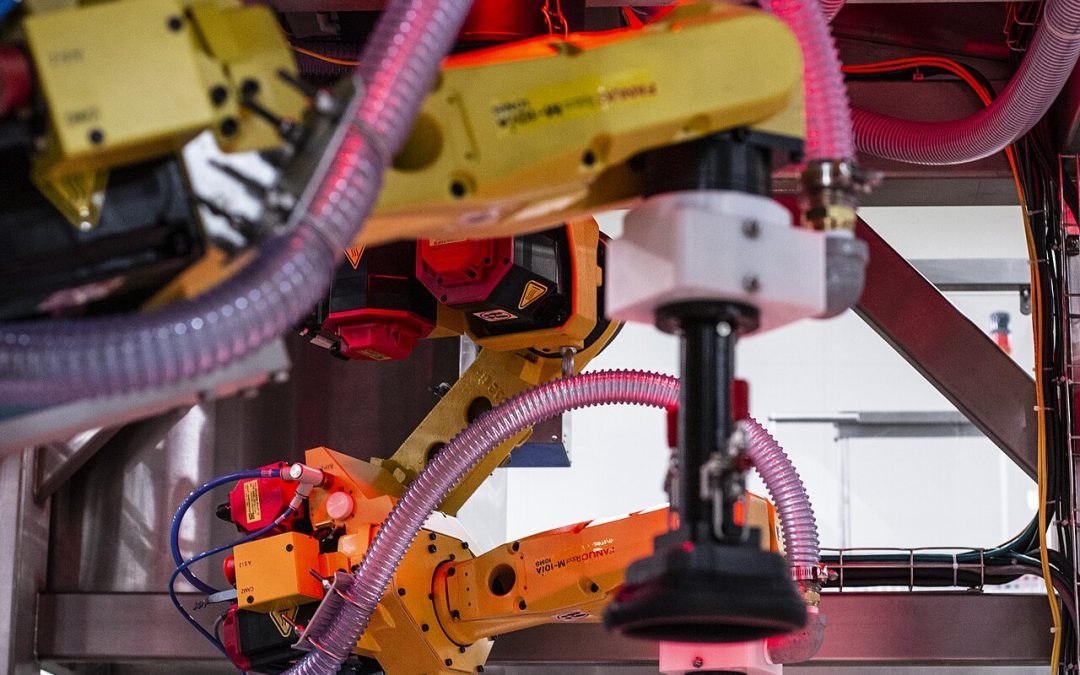
Featured photograph: Delkor robotic case packer, by Delkorpackaging / Wikimedia Commons, CC BY-SA 4.0. This separate installation illustrates robotic carton handling.

Planning a mixed-carton receiving or inspection trial? Contact CANS or message CANS on WhatsApp.
Recent Comments