
Singapore is changing the way its main business grants are organised at the end of September 2026. EDG, MRA and PSG stop on 29 September 2026, and new applications move to the consolidated EDGE Grant from 30 September 2026. If you are already planning an automation or digitalisation project, this is worth understanding before the quotation is fixed.
For manufacturers, the significant point is not simply that three schemes are being renamed. EDGE explicitly includes Automation & Digitalisation as a business area, and Enterprise Singapore says support can cover activities aimed at automating operations, adopting digital solutions and improving business efficiency.
That makes the next two weeks a useful planning window for factories considering projects such as production automation, MES, OEE, machine vision, predictive maintenance, industrial IoT, ERP integration and industrial AI.
What changes on 30 September 2026?
Enterprise Singapore states that EDGE will bring support across multiple business areas under one framework. The published terms currently include:
- launch date: 30 September 2026;
- legacy schemes: EDG, MRA and PSG cease on 29 September 2026;
- annual grant cap: up to S$100,000 per company across eligible EDGE activities;
- support level: up to 70% for SMEs and up to 50% for non-SMEs, depending on the activity;
- digitalisation / automation sub-cap: within the S$100,000 annual cap, up to S$30,000 may be used on single-function digital solutions, integrated enterprise systems and selected automation activities;
- payment model: support is reimbursement-based after the activity is completed and full payment has been made.
One important qualification: Enterprise Singapore has not yet published the complete activity-by-activity eligibility list. Its FAQ says the detailed supportable activities and processing durations will be available from 30 September 2026. Manufacturers should therefore avoid assuming that every customised MES, AI or automation project automatically qualifies.
What changes for a factory project
Industrial digitalisation projects rarely fit neatly into one software category. A serious factory project may combine PLC connectivity, edge computing, databases, MES, production scheduling, OEE, condition monitoring, machine vision and ERP/WMS integration.
Under the previous environment, buyers often started by asking which grant scheme or pre-approved solution fitted the project. EDGE changes that conversation towards the business activity and outcome: automation, digitalisation, efficiency, innovation or sustainability.
That is a better technical starting point. The project should first define the production problem and measurable result, then select the technology architecture.
For example, a manufacturer with unexplained downtime should not begin by buying an AI dashboard. The correct sequence may be automatic OEE and downtime capture, machine-state integration, root-cause coding and only then analytics or AI. A plant suffering recurring rotating-equipment failures may get more value from condition monitoring and predictive maintenance connected to its CMMS workflow.
Five project types Singapore manufacturers should prepare now
1. MES and production integration
An MES project should connect production orders, machine status, material consumption, quality, traceability and operator workflows rather than create another manual-entry layer. For factories running multiple systems, it is useful to define clearly what belongs in ERP, MES, WMS, CMMS and OEE. CANS explains the separation in ERP vs MES vs WMS vs CMMS vs OEE: How They Fit Together in a Factory.
Before applying for support, establish the target line or process, required interfaces, expected reduction in manual work, traceability improvement and the KPIs that will be measured after deployment.
2. Brownfield automation and data connectivity
Many Singapore plants do not need wholesale PLC or SCADA replacement. Existing machines can often be connected using OPC UA, industrial Ethernet, Modbus, gateways or edge middleware while reliable local control remains untouched.
A brownfield architecture can therefore separate control from data acquisition and digitalisation. CANS’ guide to OPC DA to OPC UA brownfield integration shows how older systems can be modernised without replacing the plant.
3. Machine vision linked to production traceability
Machine vision creates more value when inspection results are linked to product, batch, serial number, machine state and reject action. A camera that only produces PASS/FAIL is useful; a vision system that creates traceable quality data is much more valuable.
For electronics and precision manufacturing, edge-AI machine vision can reduce inspection latency and allow inference to remain close to the production line while sending results to MES or quality databases.
4. Predictive maintenance tied to real maintenance work
Predictive maintenance should not stop at a vibration trend or anomaly score. The business value appears when abnormal condition data produces an actionable maintenance workflow: inspect, diagnose, plan parts, schedule work and record the outcome.
CANS’ predictive-maintenance implementation guide recommends starting with critical assets where failure creates measurable production or maintenance cost.
5. Industrial AI built on production-quality data
AI can optimise schedules, detect anomalies, assist maintenance, classify quality issues and support energy optimisation, but only when the underlying data is trustworthy and contextualised.
The current regional signal is clear: AI investment is moving from isolated proof-of-concept work towards operational deployment. CANS recently covered the practical scaling problem in Industrial AI Is Moving Past Pilot Projects.
For an EDGE-era project, the stronger proposal is therefore not “install AI”. It is “reduce this loss, using these plant signals, with this operating workflow, and verify the result against this baseline”.
Before asking for quotations
A manufacturer can reduce project ambiguity by preparing a short technical brief before approaching vendors. It should include:
- business problem: downtime, labour dependency, quality loss, traceability gap, slow planning, maintenance cost or energy intensity;
- scope boundary: plant, line, machines and existing systems involved;
- existing interfaces: PLC brands, SCADA, ERP, databases, industrial networks and available APIs;
- baseline: current cycle time, OEE, downtime, rejects, maintenance hours, energy use or manual transaction count;
- target outcome: measurable improvement expected from the project;
- implementation constraints: shutdown windows, cybersecurity, validation, production continuity and data residency;
- replication plan: whether the first implementation will become a template for other lines or sites.
This makes vendor proposals easier to compare and reduces the risk of buying a digital tool that cannot integrate with the plant.
A note for Malaysian suppliers
The EDGE transition is also relevant to Malaysian machine builders, embedded-system developers and industrial integrators serving Singapore customers. The customer may increasingly expect quotations to separate hardware, software, integration, engineering and measurable project outcomes clearly enough for grant assessment and project governance.
That favours suppliers that can work across OT and IT boundaries rather than deliver a standalone box. CANS’ scope spans industrial automation and SCADA, embedded systems, MES/OEE, industrial networking, machine vision, predictive maintenance, IoT and industrial AI integration.
Do not delay a ready project purely to wait for EDGE
Enterprise Singapore’s FAQ states that EDG, MRA and PSG remain accessible until the EDGE launch, and applications submitted before 30 September 2026 will continue to be assessed under the existing schemes. Ongoing projects are not cancelled by the transition.
For a project that is already technically defined and commercially ready, the correct decision is therefore based on timing and eligibility rather than the assumption that the new framework will automatically be better. For projects still at concept stage, the next two weeks are best used to define scope, baseline and outcomes so that the project is ready when the detailed EDGE activity list is published.
Discuss an automation or digitalisation project with CANS
CANS can assess an existing manufacturing process and define a staged architecture covering PLC/SCADA integration, MES, OEE, predictive maintenance, machine vision, industrial IoT, energy monitoring and industrial AI, including integration with ERP, WMS and CMMS systems.
Send CANS an enquiry or contact CANS on WhatsApp.
References
- Enterprise Singapore — EDGE Grant
- Enterprise Singapore — FAQ: EDGE Grant
- Enterprise Singapore — Productivity Solutions Grant transition notice
- Enterprise Singapore — Enterprise Development Grant transition notice
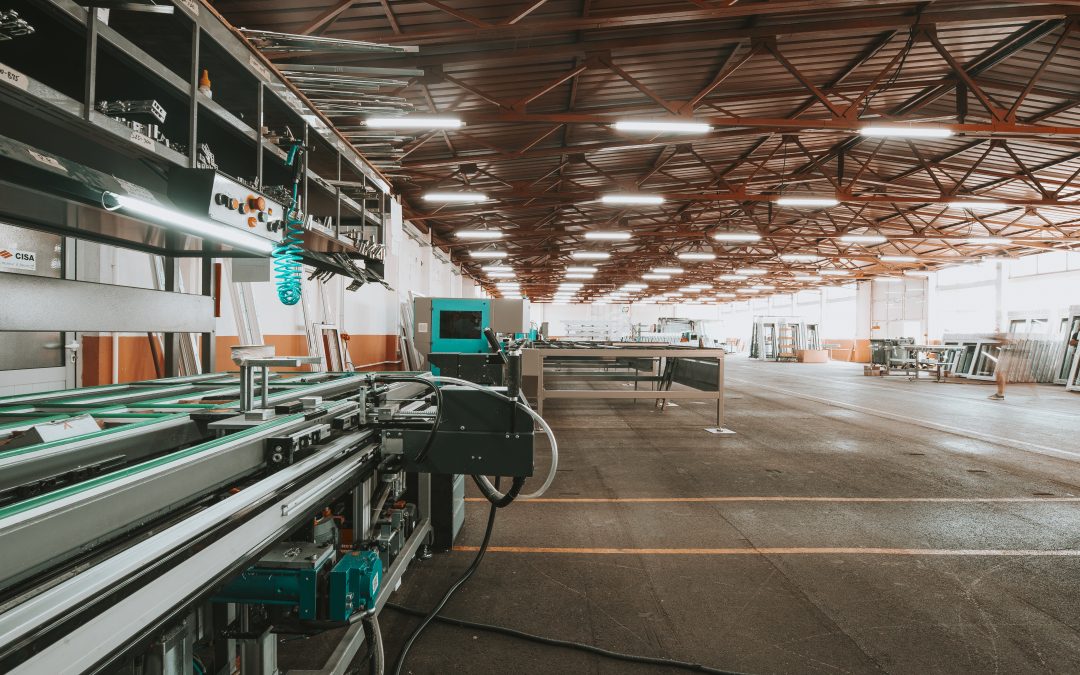
- Wikimedia Commons — Industrial production line operating in a large modern factory, Shixart1985, CC BY 2.0
Recent Comments