
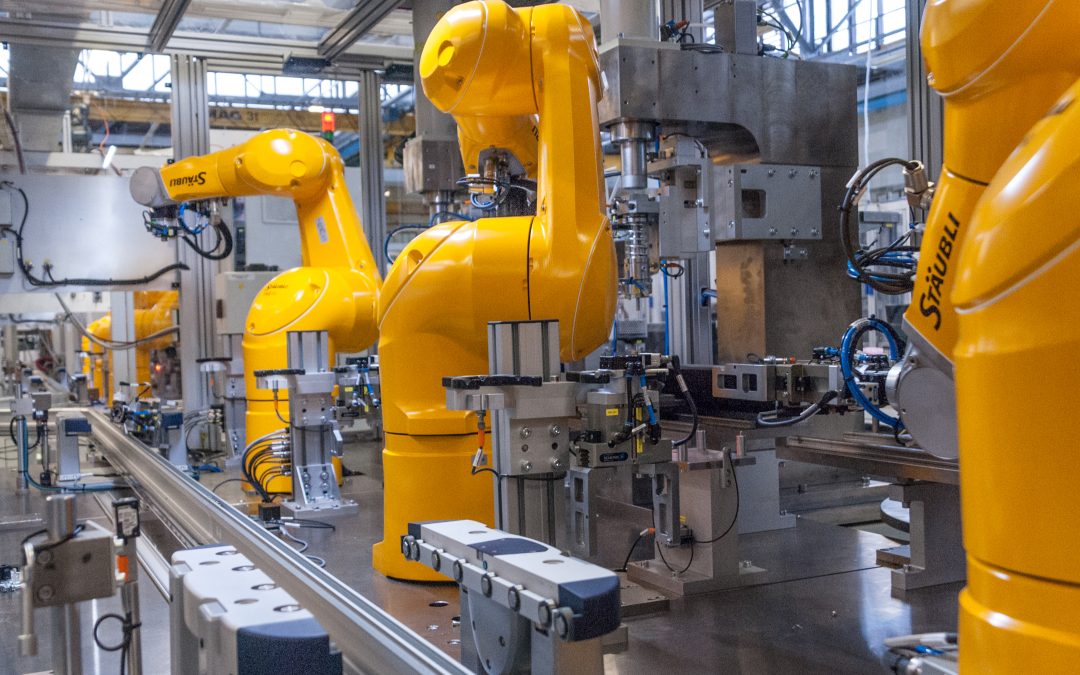
There is no shortage of industrial AI pilots now. The harder part is getting one to survive outside the pilot area and work across another line, another shift or another plant. That is where most of the engineering starts.
That shift is visible in current market signals. On 15 September 2026, the Singaporean-German Chamber of Industry and Commerce is convening an Industrial AI for Competitiveness forum explicitly framed around moving manufacturers past AI pilots and into measurable business impact. At the M360 ASEAN Manufacturing and Production Summit in Kuala Lumpur on 10 September, GSMA highlighted regional enterprise research showing multi-year transformation programmes replacing isolated pilots, with AI expected to take the largest share of digital investment and IoT, analytics and next-generation connectivity close behind.
Malaysia is also pushing smart-factory adoption at national scale. In July, RTM reported that 93 Malaysian companies had already been recognised as smart factories under the SIRIM and MARii recognition programme as of 30 June 2026, with a further 68 expected by year-end. The broader NIMP 2030 target remains at least 3,000 smart factories.
The model is only one part of the job. If the data has poor context, the timestamps do not line up, or there is no safe way to act on the result, a better AI model will not rescue the project.
The real change is scale
Singapore provides a useful benchmark because several factories have already moved beyond small proofs of concept. In July 2026, Singapore EDB highlighted seven local sites in the World Economic Forum Global Lighthouse Network. Rockwell Automation’s Singapore facility, for example, had deployed more than 50 digital and AI solutions. EDB reported a 43% increase in labour productivity, a 35% reduction in defects and a 67% reduction in time-to-competency.
Those figures matter because they illustrate what industrial AI looks like after the pilot phase: not one dashboard or one predictive model, but many connected use cases sharing the same operating data, infrastructure and governance.
Malaysia is moving in the same direction. NXP’s August 2026 announcement for its new Petaling Jaya assembly-and-test expansion describes a highly automated smart factory using advanced automation, automated material handling systems and advanced quality-management technologies. The site is expected to ramp production in the first quarter of 2028 and more than double output when fully operational.
The common theme is that AI is being purchased together with automation, equipment connectivity, material flow, quality systems, data infrastructure and production integration. That is a more useful way to frame a smart-factory investment than treating AI as a standalone software package.
Why industrial AI pilots often fail to scale
A pilot can look successful because the project team manually cleans data, selects a narrow machine set, fixes tags, reconciles timestamps and explains exceptions by hand. The model may be technically sound, but the surrounding process is not repeatable.
When the same solution is rolled out across another line or plant, common problems appear:
- different PLC tag names for the same process variable;
- missing production-order, recipe, batch or quality context;
- machine data arriving at inconsistent sampling rates;
- timestamps that do not align across PLC, historian, MES and inspection systems;
- maintenance records that identify assets differently from production systems;
- network interruptions that cause gaps in cloud data;
- no safe mechanism for returning recommendations to operators or control systems;
- unclear ownership when the AI output conflicts with an experienced operator;
- no agreed KPI proving that the model is worth operating after the pilot.
The model is therefore only one layer. A scalable deployment needs a controlled path from machine → data → context → model → decision → operational action → measured result.
What has to be in place before AI scales
1. Connect the equipment without disturbing production control
The first layer is reliable acquisition from existing PLCs, controllers, sensors, drives, inspection equipment and utilities. Depending on the plant, that may involve OPC UA, Modbus TCP/RTU, industrial Ethernet, CAN or CAN FD, J1939, proprietary machine interfaces, databases or APIs.
Brownfield plants should generally avoid replacing functioning controls merely to create an AI project. CANS has covered this migration principle in OPC DA to OPC UA: Modernise Brownfield SCADA Data Without Replacing the Plant.
2. Standardise meaning, not just connectivity
Collecting 100,000 tags does not create useful intelligence if nobody knows which motor, recipe, line, product, shift or maintenance event each tag belongs to. The data layer should therefore establish a consistent asset hierarchy and naming model.
At minimum, each important data point should be associated with the relevant asset, unit, engineering range, timestamp, source system and production context. Event-based data should also retain state transitions rather than only periodic values.
3. Put edge resilience between the plant and cloud
Factories cannot assume permanent cloud connectivity. Edge gateways or industrial PCs should be able to buffer data, perform protocol conversion, execute local rules and continue essential monitoring during WAN interruptions.
For higher-frequency applications such as machine condition monitoring, machine vision or process anomaly detection, selected analytics may need to run at the edge to avoid unnecessary latency and data transfer.
4. Join machine data with MES, WMS, CMMS and quality context
A vibration increase means little without knowing operating speed, product grade, load, maintenance history and whether the machine is running a different recipe. A cycle-time anomaly may be caused by machine behaviour, material availability or an upstream quality hold.
This is why industrial AI should not be architected separately from production systems. The ownership boundaries between ERP, MES, WMS, CMMS and OEE are explained in ERP vs MES vs WMS vs CMMS vs OEE: How They Fit Together in a Malaysian Factory.
5. Give every model an operational action path
An AI output becomes valuable only when it changes a decision. Each use case should therefore define what happens after a prediction:
- create a maintenance notification;
- adjust an inspection priority;
- flag a process drift to an operator;
- recommend a set-point change for approval;
- change a scheduling priority;
- trigger additional measurement;
- escalate a quality hold;
- open an exception workflow in MES or CMMS.
For early deployments, recommendation-with-approval is usually easier to govern than immediate closed-loop control. Closed-loop AI should be introduced only where constraints, fail-safe behaviour and responsibility are explicitly engineered.
6. Measure model value in factory KPIs
Accuracy alone is not a business KPI. A technically excellent model can still have little value if it identifies events that operators cannot act on.
Useful measures include avoided downtime, mean time to repair, scrap reduction, first-pass yield, energy per unit, maintenance labour saved, inspection time, line throughput, false-alarm rate and response time. The KPI should be agreed before the project starts so that the pilot does not become an open-ended experiment.
Four use cases with a good path from pilot to scale
Predictive maintenance. Start with a small set of critical rotating assets where failure cost is clear, combine vibration and temperature with machine operating state, and connect alerts into the maintenance workflow. See From Alarm-Driven Maintenance to Predictive Maintenance.
AI machine vision. Link inspection results to part identity, recipe, production order and downstream disposition so the system becomes a traceability and quality tool, not only a camera. CANS discusses this architecture in Edge AI Machine Vision for Electronics Manufacturing.
Energy optimisation. Join energy meters with operating state and production output. This allows energy intensity to be analysed per batch, product, line or operating mode instead of reporting only monthly consumption.
Production optimisation. Combine PLC states, cycle times, downtime reasons, MES orders, quality data and material availability. This produces a much stronger basis for bottleneck detection, scheduling assistance and OEE improvement than any one system can provide alone.
Before issuing an industrial AI RFQ
| Area | Minimum question to answer |
|---|---|
| Business case | Which measurable factory KPI must improve? |
| Data | Which machine, process and contextual data are required? |
| Integration | How will PLC/SCADA data be joined with MES, WMS, CMMS, quality or ERP data? |
| Edge operation | What continues working if the WAN or cloud link is unavailable? |
| Action | What operational workflow follows an AI recommendation? |
| Governance | Who approves, overrides and reviews model decisions? |
| Scale | How can the solution be duplicated across lines without repeating the integration project from zero? |
Start with one line, not the whole factory
For many factories, the smallest scalable starting point is not an enterprise-wide AI platform. It is one production area with enough complexity to prove the architecture:
- select one line or equipment group with a clear operational KPI;
- connect machine and sensor data through a resilient edge layer;
- standardise asset names and timestamps;
- bring in the minimum MES, quality or maintenance context required;
- deploy one AI or analytics use case;
- connect the result to an actual operator, maintenance or production workflow;
- measure business impact for a defined period;
- document the integration pattern so the next line can reuse it.
This approach produces something more valuable than a demonstration: a repeatable smart-factory deployment pattern.
How CANS can help
CANS works across industrial automation, embedded systems and digitalisation, which is the integration boundary where industrial AI projects most often succeed or fail. Typical work includes PLC/SCADA connectivity, edge gateways, industrial protocols, sensor integration, MES/WMS/CMMS interfaces, machine vision, condition monitoring, data engineering and digital-twin integration.
For manufacturers evaluating an industrial AI project, CANS can help define the architecture before software procurement: what data is required, where it should be processed, how it should be contextualised, how the AI output should enter operations and which KPI should prove value.
Send CANS an enquiry or discuss your industrial AI or smart-factory project on WhatsApp.
References
- Singaporean-German Chamber of Industry and Commerce — Industrial AI for Competitiveness forum, 15 September 2026
- GSMA — M360 ASEAN 2026 Manufacturing and Production Summit
- RTM — 93 Malaysian companies recognised as smart factories as of June 2026
- NXP Semiconductors — Petaling Jaya assembly and test smart-factory expansion, 12 August 2026
- Singapore EDB — Singapore’s seven WEF Lighthouse factories, 15 July 2026
- Singapore EDB / A*STAR — A*STAR and Microsoft manufacturing AI collaboration, 20 April 2026
Recent Comments